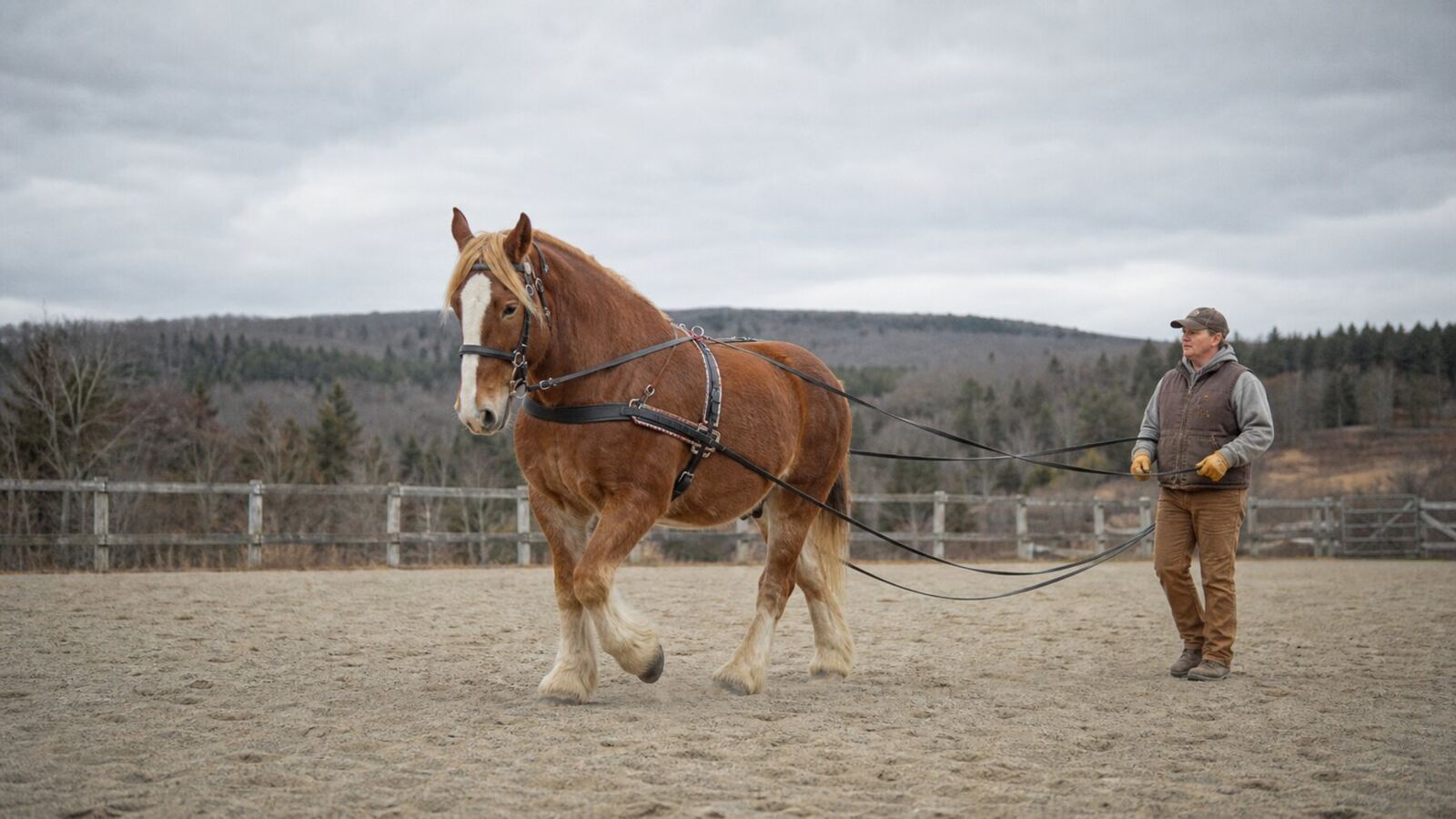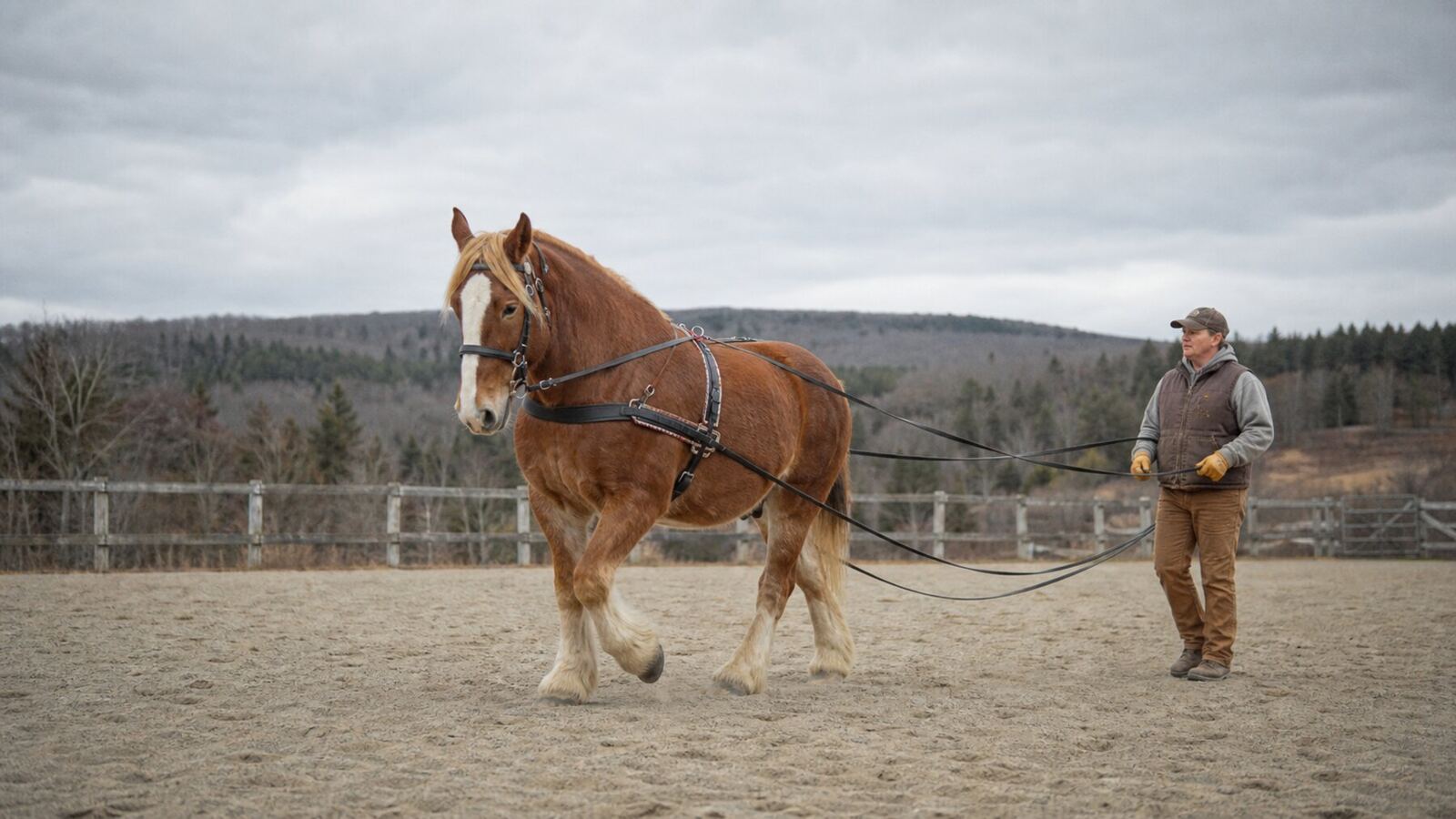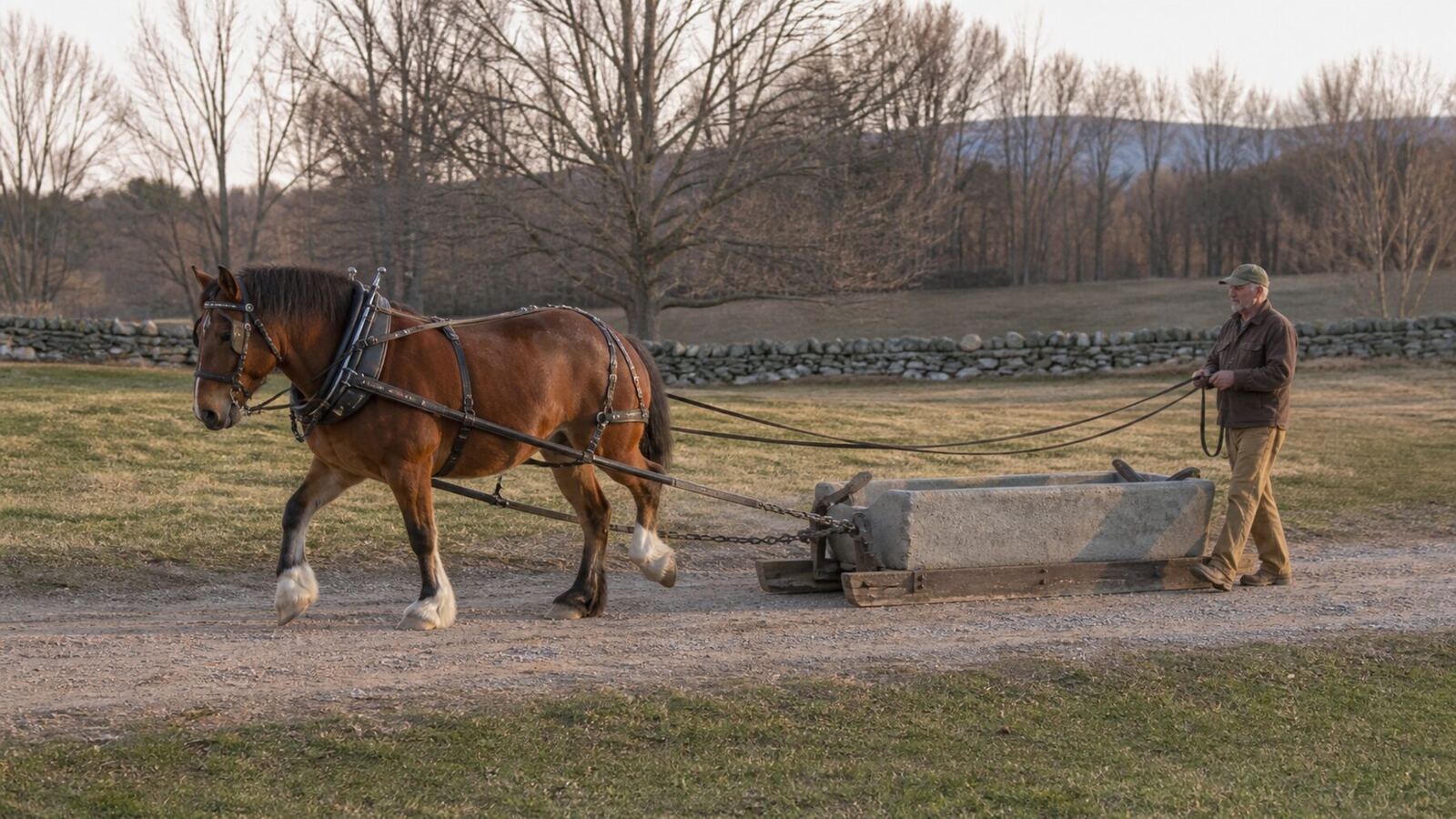
Teach a draft horse to take load smoothly, stop straight and wait without turning a training session into a strength contest.
Separate the cue from the load
Confirm walk, whoa, stand and back in hand and on long lines before hitching. The horse should recognize the voice cue without being pulled into the answer. Use the same order each time: gather attention, give the chosen cue, support it lightly if needed, then release when the response begins. A start learned only by feeling the load strike the traces is already late.
Check the work area for level footing, room to turn and a safe way to unhitch. A knowledgeable helper should understand where to stand and how to release the training object. Gloves, sound lines and properly fitted harness are basic controls. Do not introduce a new load when wind, traffic or fresh equipment has already raised the horse's concern.
Teach the traces to become taut quietly
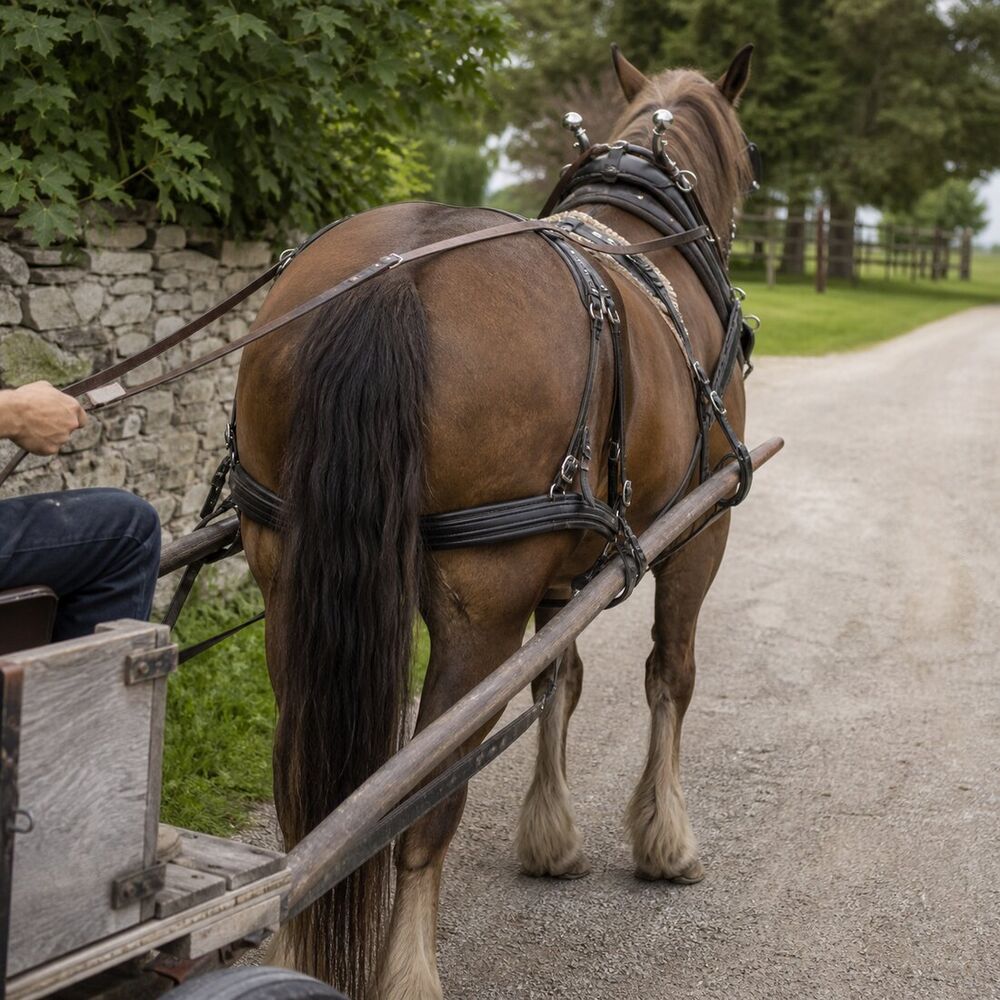
Begin with a light, predictable resistance that cannot roll into the horse. Ask for one or two straight steps. Watch the shoulders and hindquarters as the traces come taut. The horse should lean into the collar or breast collar without jumping forward, twisting or throwing the head. Stop, stand and reset before fatigue or anticipation changes the movement.
If the horse rushes, reduce the demand and return to voice transitions. If it stalls, check fit, footing, pain, confusion and load before adding pressure. A stronger cue cannot correct a collar that pinches or an object that catches. Progress only after several calm starts from the same light resistance, then vary the location before increasing weight.
Build a straight stop
Ask for the halt while the horse is still moving in balance, not after speed has increased. The voice cue should arrive before the rein closes. On a vehicle with breeching, the harness must allow the horse to control the vehicle without the shafts driving forward into the body. On a drag, the setup must prevent the load from running onto the horse when momentum changes.
Observe where each foot finishes and whether the hindquarters swing. A crooked stop may come from rein imbalance, a surface slope, unequal traces or the horse avoiding pressure. Straighten the approach and reduce speed rather than correcting after the horse is already stationary. Reward the first balanced halt, then ask for a brief stand before moving again.
Make standing part of every transition
A stop is incomplete if the horse immediately walks off. After whoa, soften the contact without abandoning it and ask for stand. Begin with a duration the horse can succeed at, then add time gradually. The helper remains quiet and avoids stepping toward the load unless the teamster has communicated the plan.
Practice waiting after a single step, after a short pull and before unhitching. These pauses teach that not every cue predicts heavy effort. If the horse paws, backs or turns, identify whether the demand was too long, the equipment uncomfortable or the environment distracting. Re-establish a short stand on easier terms before ending.
Increase only one variable
Weight, noise, distance, slope and vehicle movement are separate variables. Increase one while holding the others steady. A horse that quietly drags a light tire is not automatically ready for a rattling wagon on a hill. Introduce wheel noise with minimal load, and introduce more resistance with an object whose movement is already familiar.
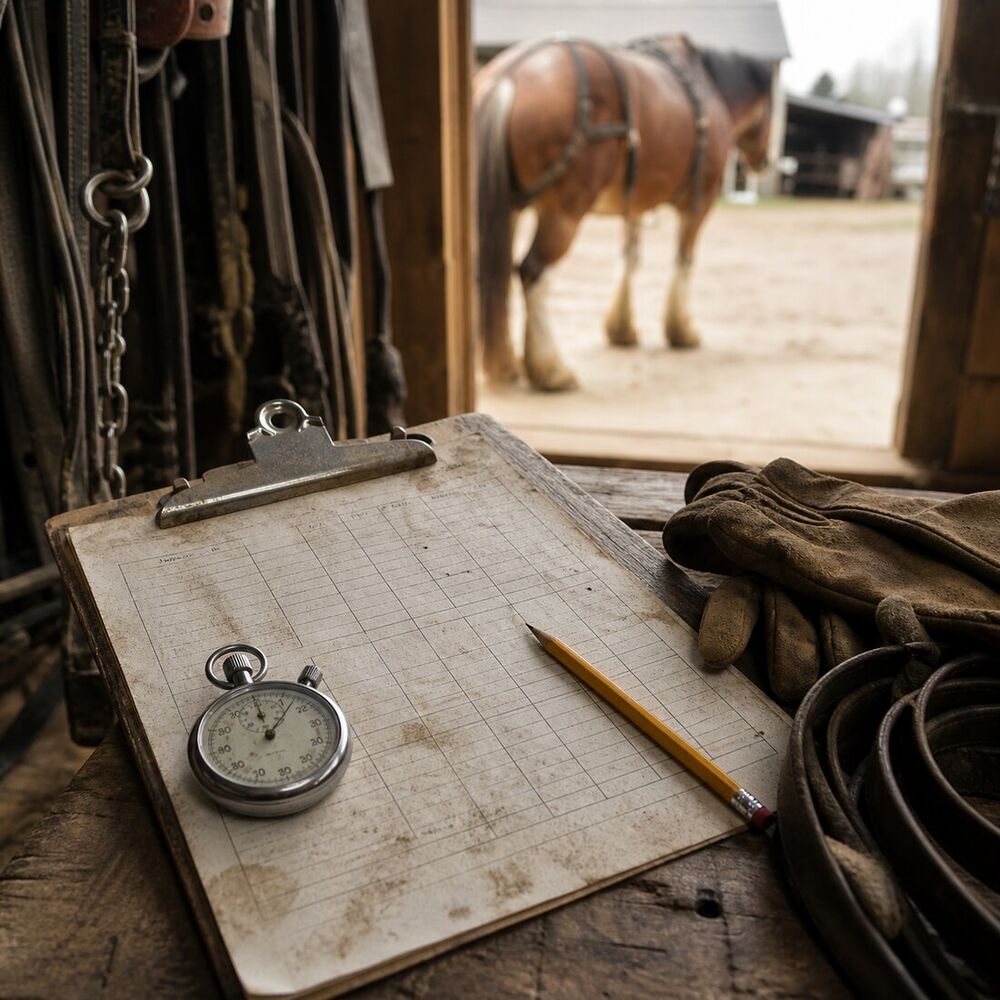
Keep a simple session log with harness used, object, estimated load, footing, distance and response. Note the first sign of rushing or hesitation rather than only the final result. This allows the next session to begin below the point of difficulty. It also prevents gradual increases from becoming invisible to the trainer.
Steady starts and stops reward patience, and the same habit of reading an animal before asking for more shows up in other species. Owners who study cocker coat and health care find the same questions we ask of a draft horse: what does this animal need in its first year, how do you judge the people who bred it, and what should a new owner expect in the first month. Different animal, same discipline of observation. Read the primer before your next buying decision.
Know when to stop the lesson
End immediately for equipment failure, entanglement, unsafe footing, pain, escalating fear or loss of control. A broken trace, slipping collar or failed brake is not a training opportunity. Secure the horse and load according to the emergency plan, then diagnose the system off the horse. Do not ask for one more repetition simply to finish on a preferred note.
A productive session may contain only a few starts and stops. Judge it by the clarity and repeatability of the response. When the horse can take a familiar load without a lunge, halt straight, stand on a soft contact and repeat on another day, the foundation is becoming dependable. More weight should remain a later decision, not the proof of today's lesson.
Steady starts and stops reward the same patience you would bring to any structured course of study. When a horse leans into the traces, the fix is timing, not force, and the same holds for learning a trade: clear steps, honest costs, a realistic timeline. Readers who want to see how another field lays out its path, including entry requirements for that training, will find the format familiar. Both ask you to separate the cue from the pressure, build one straight stop, and know when to end the lesson.
Sources and further reading
Documents used for this guide
- Oregon State University Extension: 4-H Driving Manual
- Carriage Association of America driver proficiency program
Rules and recommendations can change. Check the linked publisher and the professional responsible for the individual horse before acting.