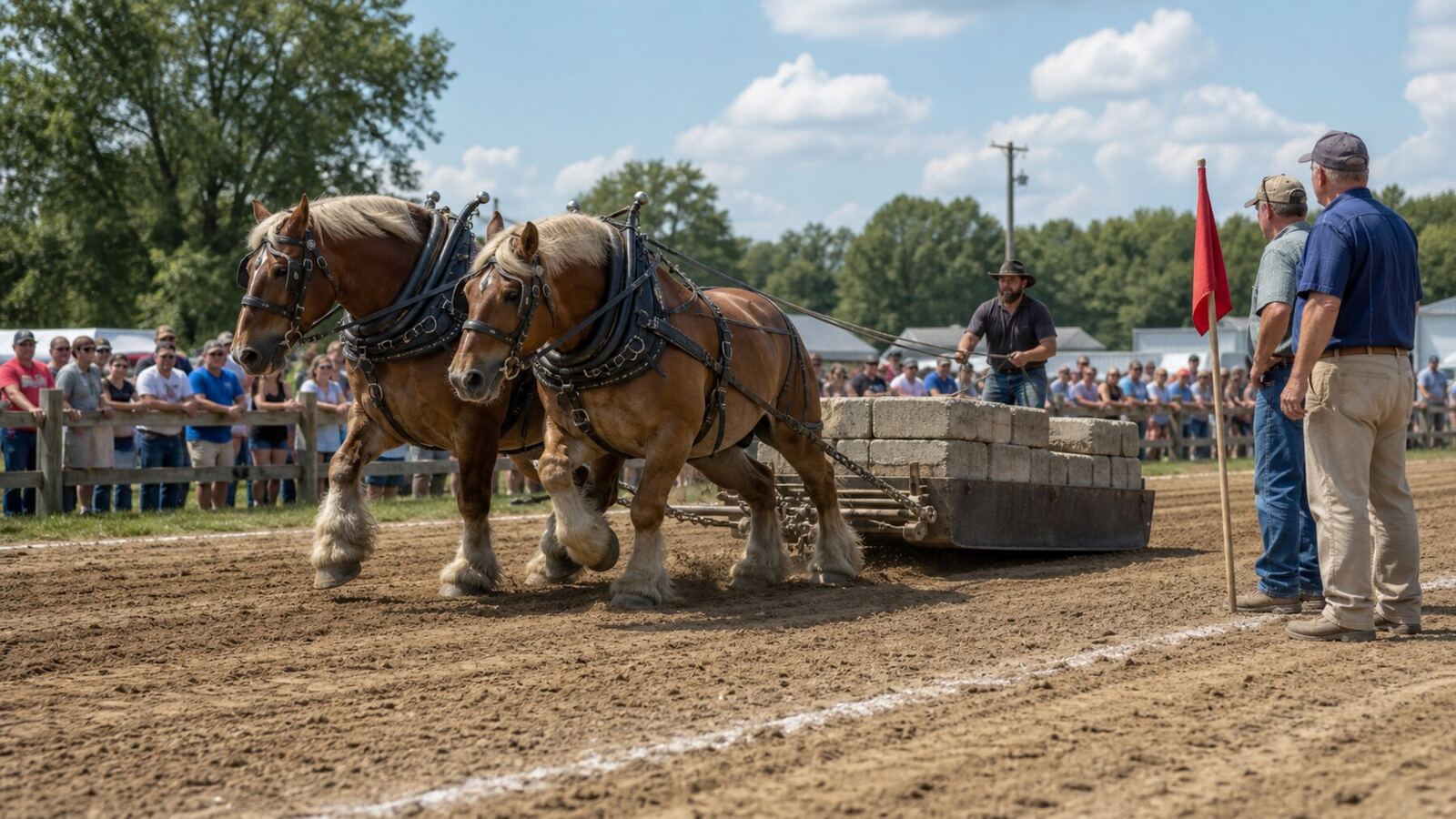
How Draft-Horse Pulls Are Judged
Understand weight classes, stone boats, dynamometers, distance, attempts, boundaries and welfare rules at draft-horse pulls.
Read the guideRules and presentation
Halter classes, pulls, fairs and event preparation explained in language spectators, exhibitors and sponsors can use.
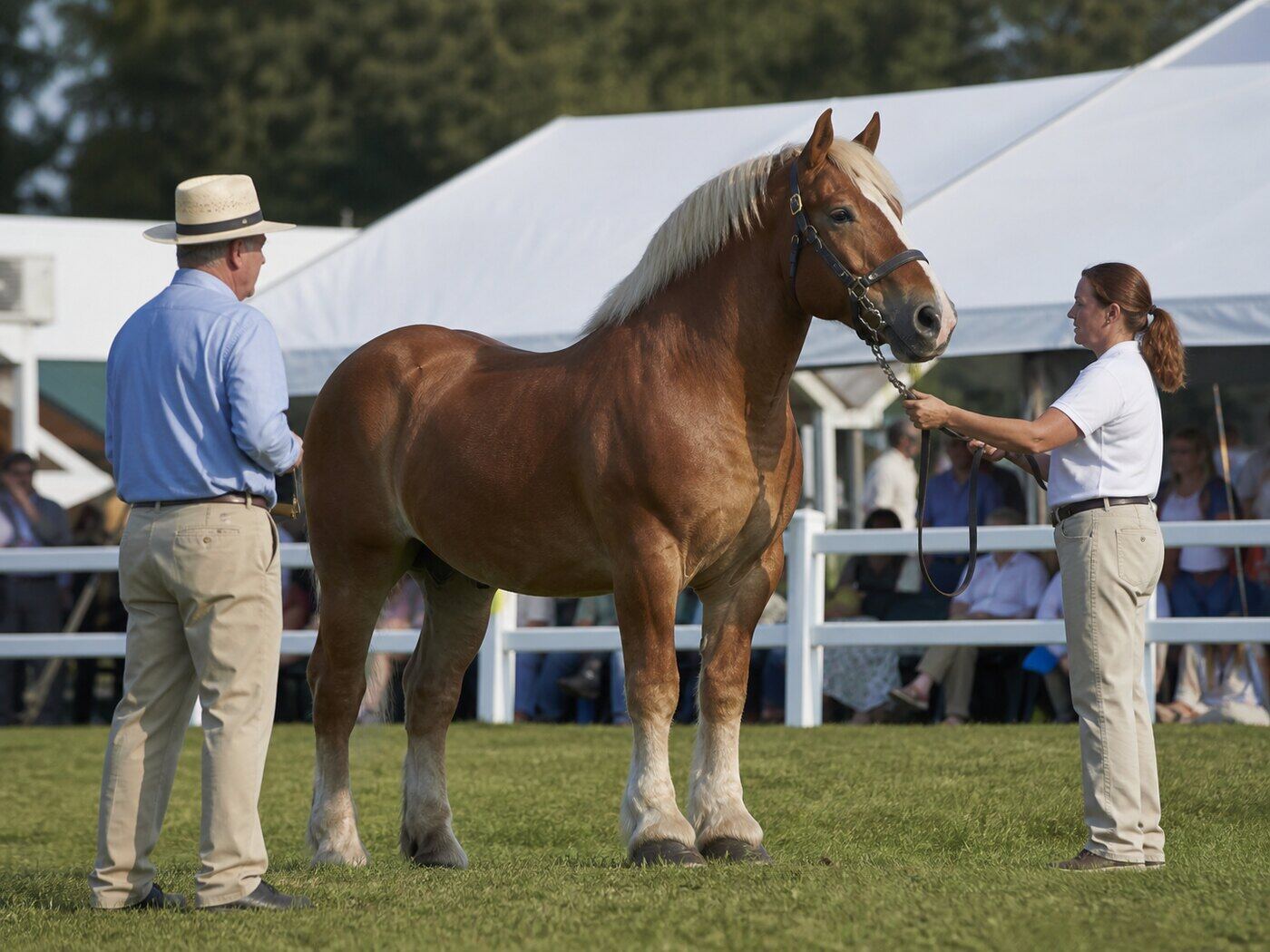
Draft-horse events bring together breed presentation, horsemanship, local rules and public spectacle. A halter class and a pulling contest reward different preparation, yet both are easier to understand when the class sheet, equipment check and judging sequence are read before the gate opens.
This section explains what officials are measuring, what exhibitors can prepare at home and which details vary by fair or association. It also gives visitors a more informed way to follow the ring without treating one result as a complete verdict on a horse.
For pulling contests, the collection distinguishes class weight, machine or stone boat, full-pull distance, partial measurement, attempts and welfare provisions. Those details let a spectator read the official sheet instead of comparing impressive numbers from events that used different surfaces, distances or resistance systems. Links lead back to published fair rules wherever possible.
For halter exhibitors, preparation starts with eligibility and documents, then moves through condition, feet, grooming, equipment, movement and ring position. The guide keeps breed custom and host rules visible because mane presentation, attire and lead arrangements can differ. Sponsors and event businesses also gain broad, recognizable subjects without forcing a useful fair guide into an obscure category.
The event desk will also document fair calendars, hitch classes, demonstrations, spectator guides and preservation work when reliable programs and results are available. Dates, class names and host rules will stay attached to each report so an archived result remains understandable later.
Field notes
Understand weight classes, stone boats, dynamometers, distance, attempts, boundaries and welfare rules at draft-horse pulls.
Read the guide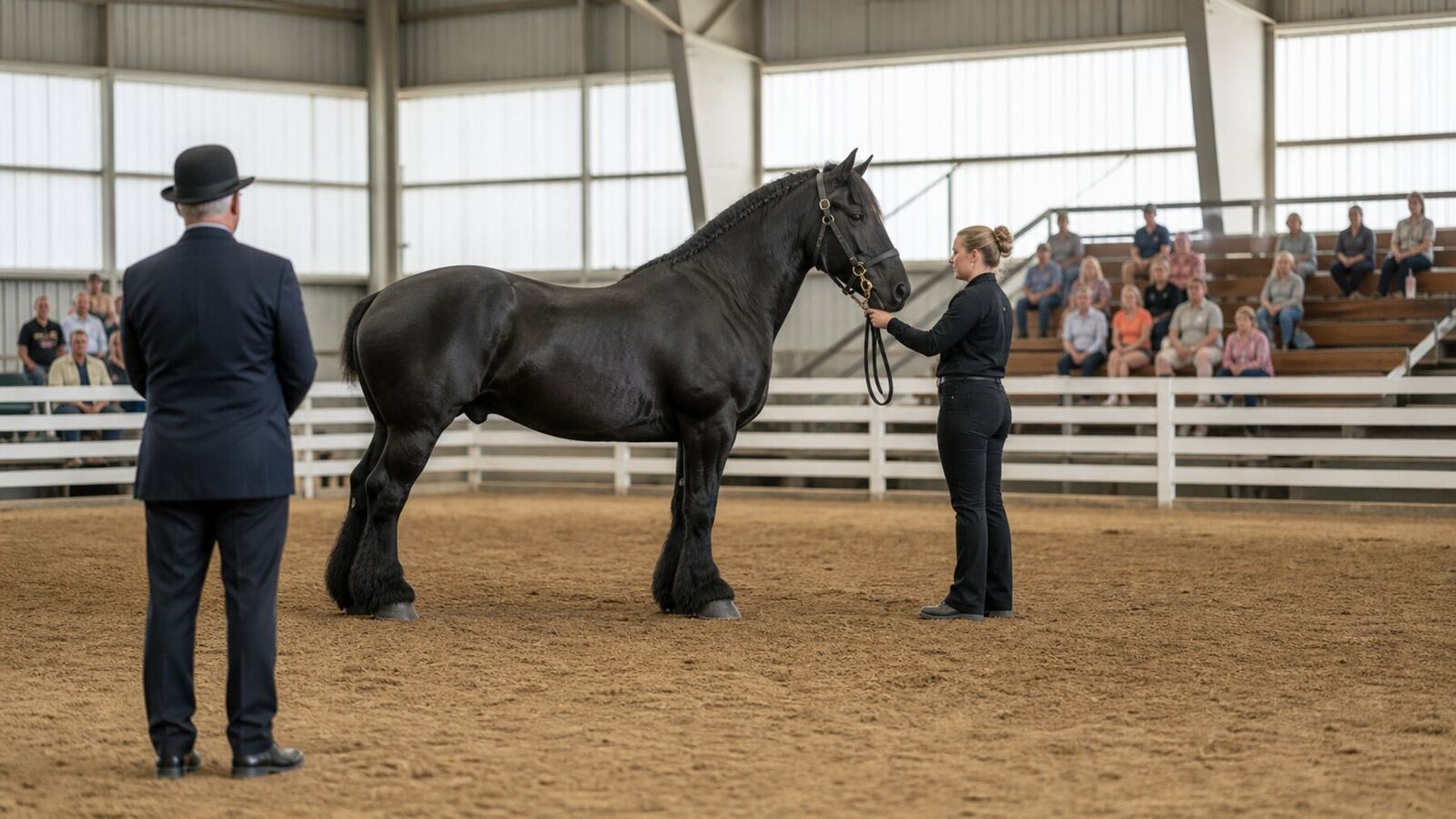
Prepare eligibility, condition, grooming, leading, setup and ring-day equipment for a draft-horse halter class.
Read the guide
A public event day is decided the night before, not at the gate: check the heat and storm guidance for the real location, confirm access in writing, set the limits that keep the horse comfortable and keep staying home a legitimate outcome.
Read the guide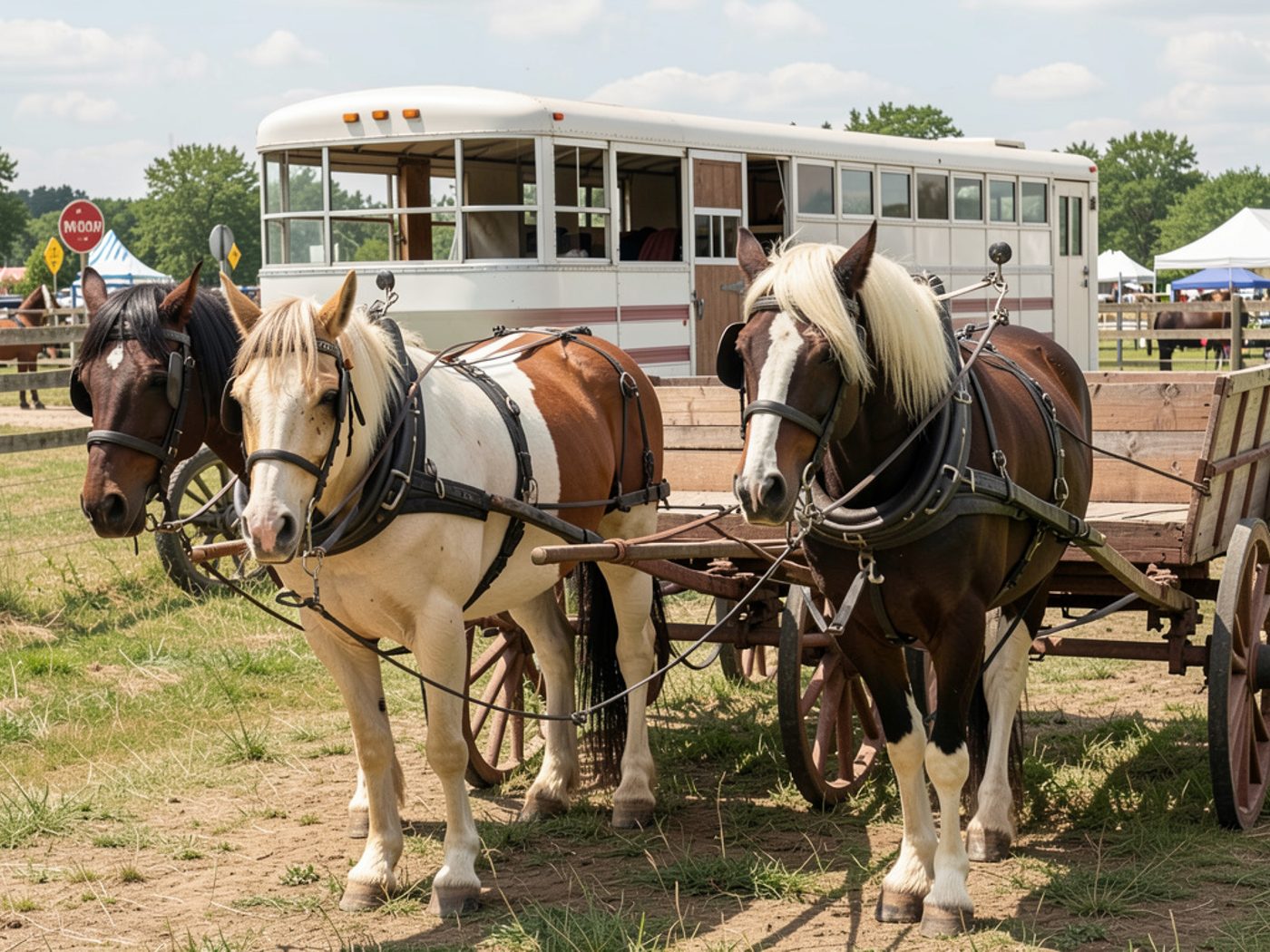
Field guide to telling grey kangaroos from wallabies, reading wombat and koala signs, and identifying kookaburra, rosella and black cockatoo calls on the South
Read the guide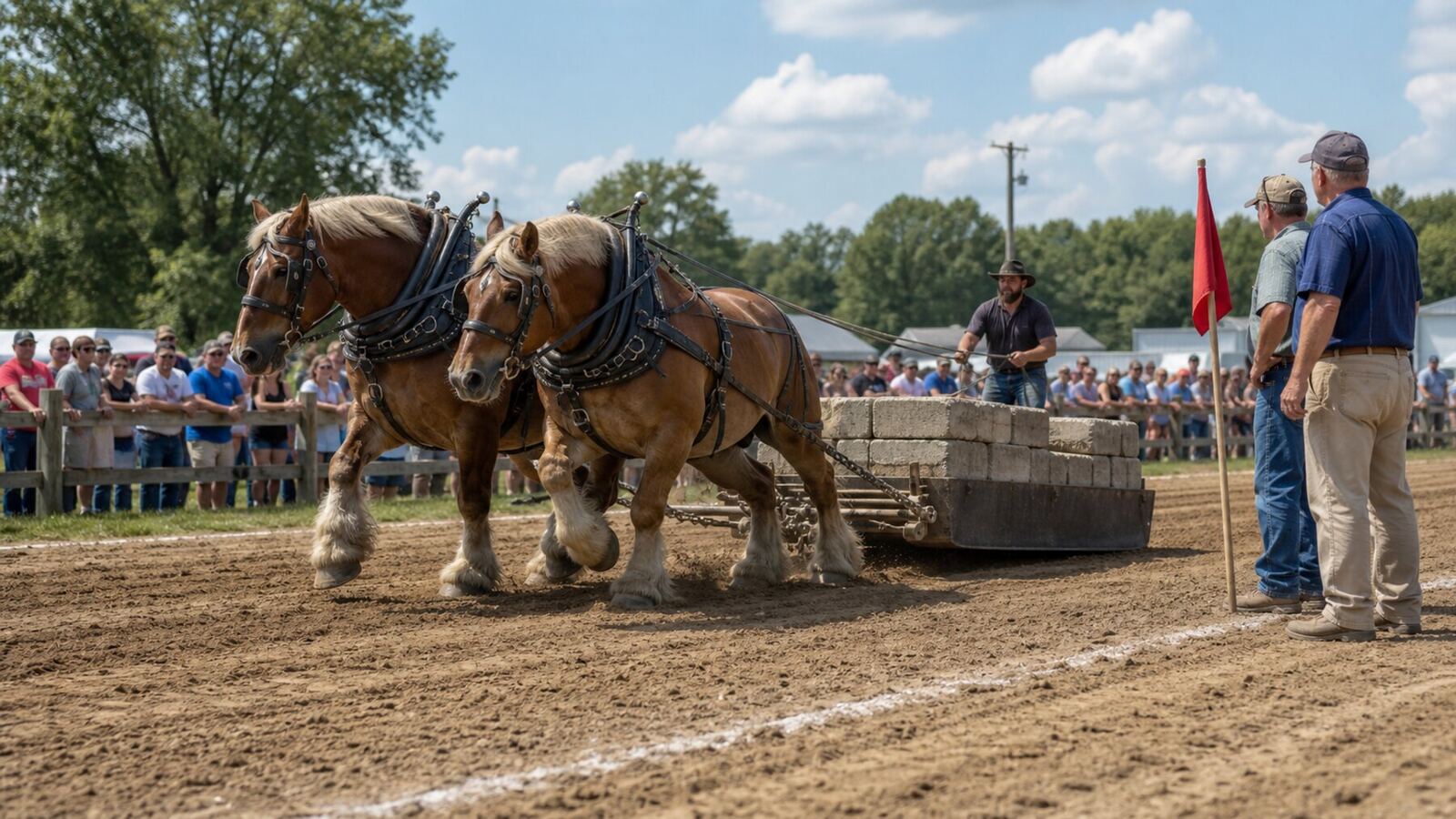
A field guide to the Belgian Tervueren in Saarland: FCI standard, breed papers, BH-VT to IGP work, and the local rules owners meet.
Read the guide
How novice spaniel classes, sheepdog outruns and a first canicross or bikejor season actually work, explained for newcomers at the field edge.
Read the guide