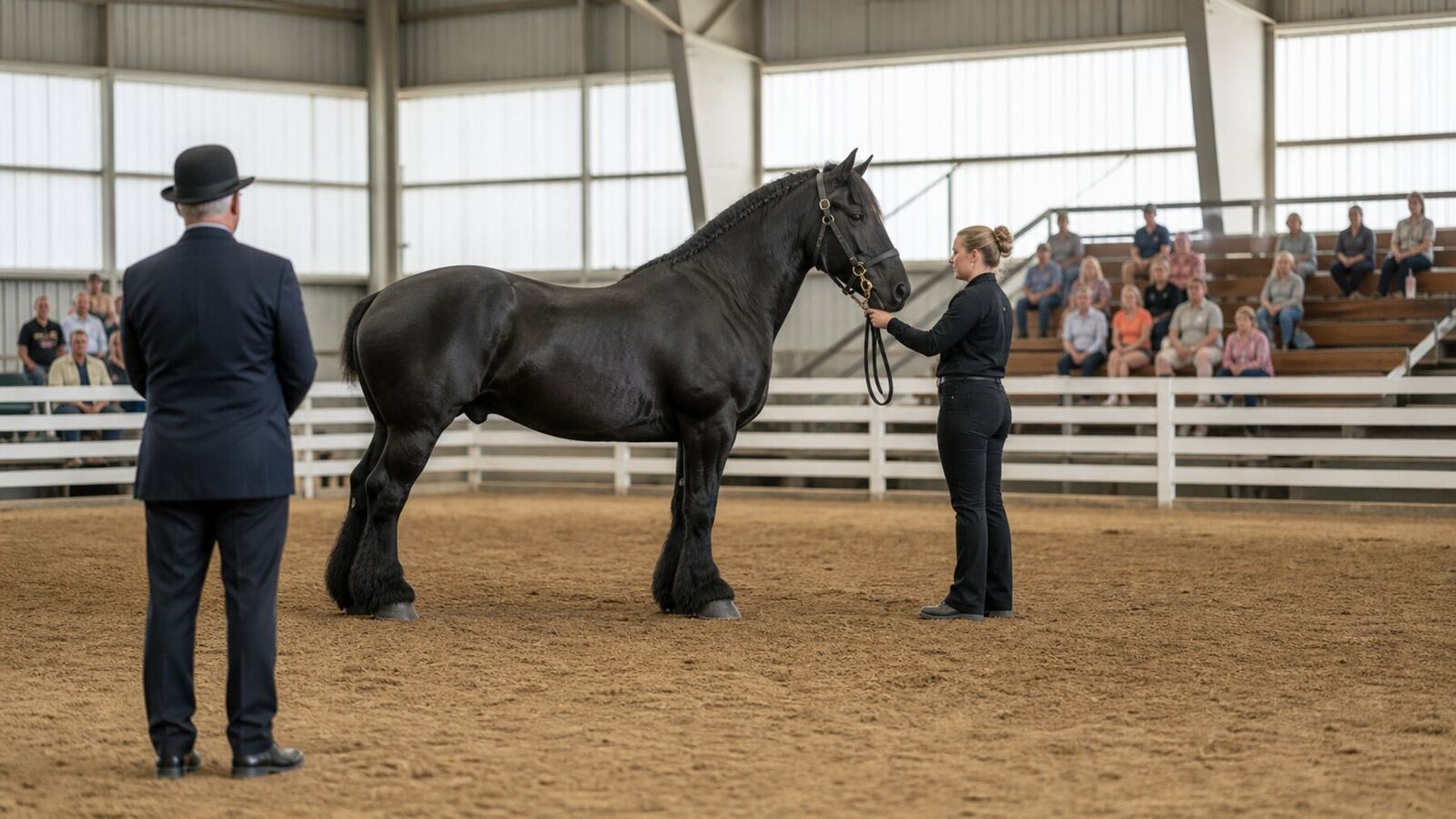
Prepare eligibility, condition, grooming, leading, setup and ring-day equipment for a draft-horse halter class.
Confirm the class before conditioning for it
Read the current premium book for breed, sex, age, ownership, registration and health requirements. Pennsylvania's Farm Show, for example, publishes detailed horse department rules, while breed youth programs and local fairs may define their own eligibility and attire. Check closing dates, original document requirements and arrival times before committing travel and grooming effort.
Make a folder with registration papers, health documents, entry confirmation, class number and emergency contacts. Photograph the originals as backup, but ask whether digital copies are accepted.
Condition for balance, not last-minute size
Plan body condition and muscle tone over weeks with the horse's veterinarian and nutrition professional. Sudden feed changes, dehydration or excessive exercise are poor substitutes for steady care. A halter horse should arrive able to walk and trot freely, stand comfortably and recover from the activity of the grounds.
Inspect feet and schedule farrier work so the horse is accustomed to the trim or shoeing before show day. Practice on level footing and watch for shortness, uneven tracking or reluctance. The ring reveals movement as well as outline, so sound preparation matters more than creating a particular stance for a photograph.
Groom to reveal the horse
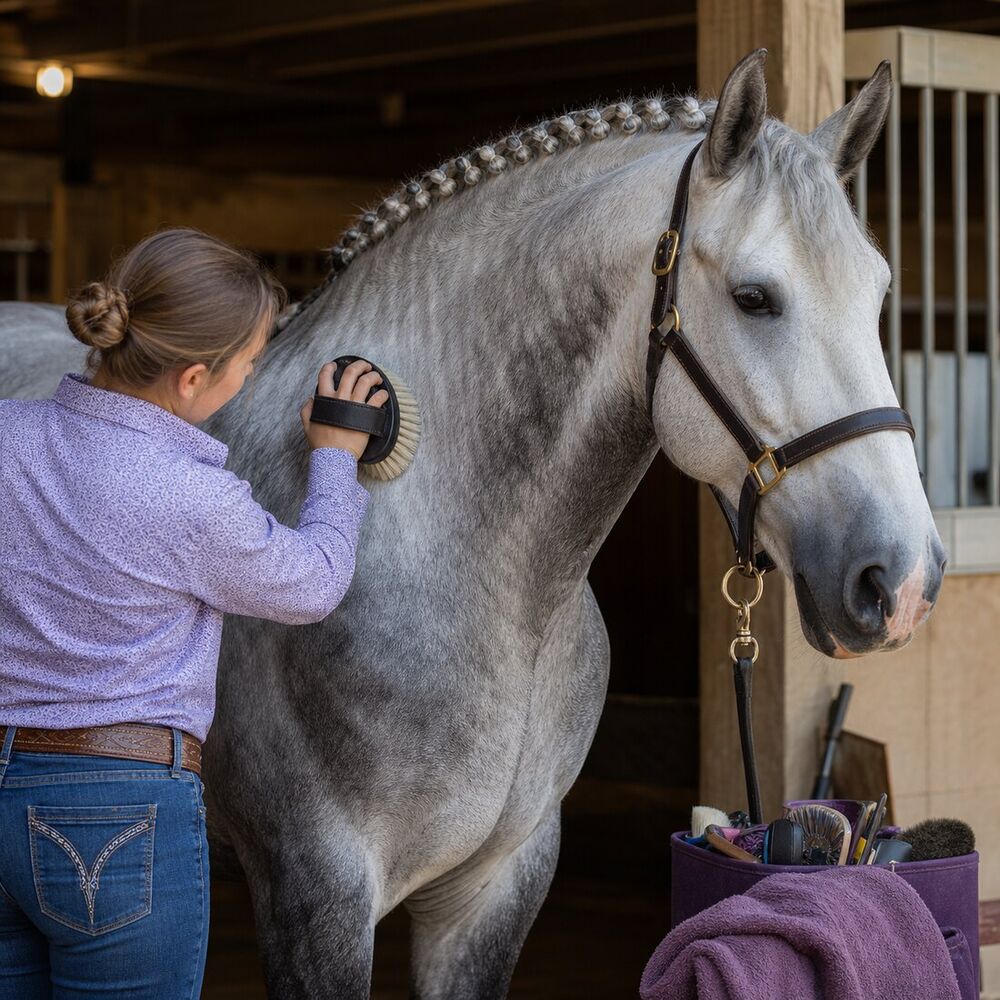
Clean coat, mane, tail, feathers and hooves according to breed custom and event rules. Begin stain removal and coat care well ahead of the class. On the day, leave enough time for the horse to dry completely and for the handler to correct rubs from shipping. Use products that do not create slippery reins or attract dust.
Braiding, mane roll and tail presentation vary among breeds and classes. Follow the current association or fair convention rather than copying a photograph without context. Grooming should clarify the neck, shoulder, legs and feet. It should not conceal a condition the judge is expected to evaluate.
Fit the halter and train the setup
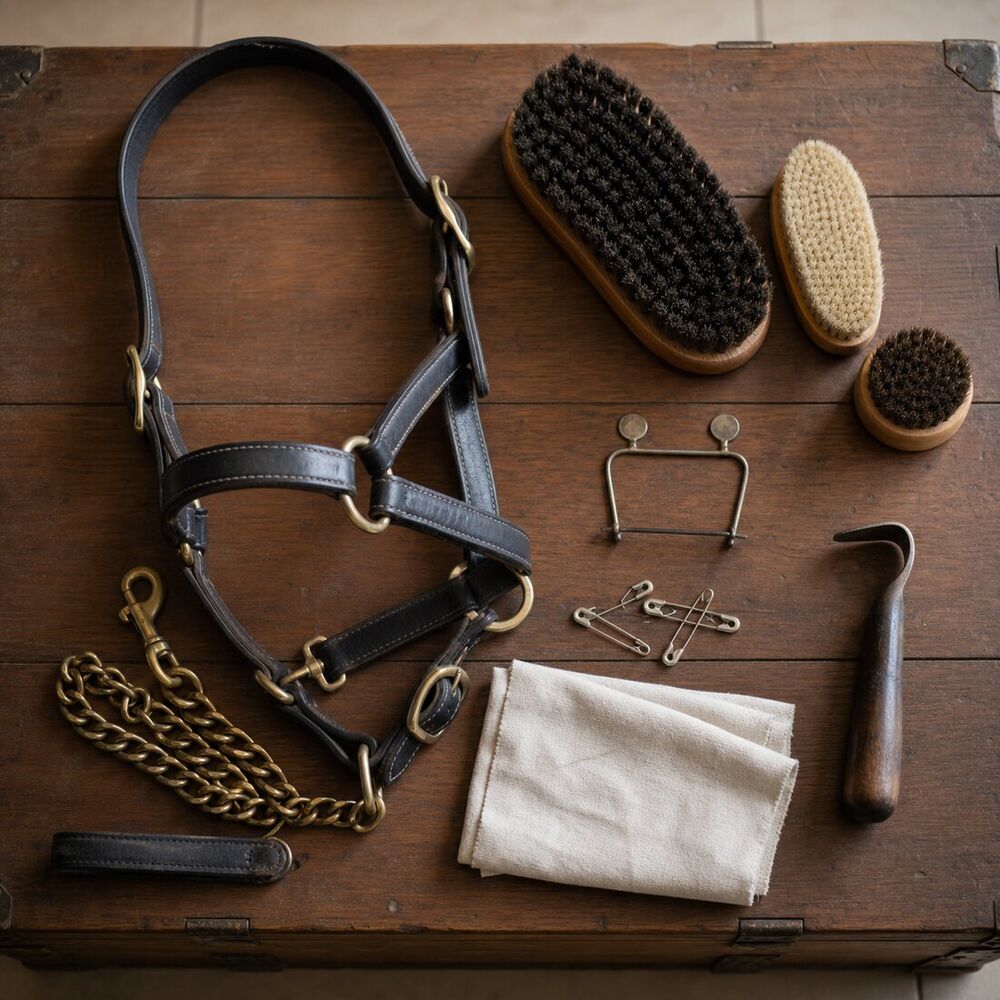
Use a clean, sound halter that fits the horse's head without crowding the eye, pinching the cheek or hanging loose enough to shift. Check the lead and chain arrangement against the rule book and the handler's experience. The Belgian Draft Horse Corporation youth guidance offers one example of breed-specific expectations, while other programs differ.
Practice walking a straight line, turning away with room, trotting promptly and stopping without crowding. Teach the horse to stand square from a light cue, but do not endlessly shuffle feet after the judge is already looking. AQHA's halter education emphasizes a deliberate setup; the useful principle across disciplines is that the handler presents the horse without blocking the judge's view.
Rehearse the ring sequence
Ask a helper to act as judge and move around the horse. The handler should change position smoothly so the horse remains visible while personal space and control are maintained. Practice entering with other horses, waiting at the rail and leaving without turning into traffic. A large draft horse needs more turning room than the handler may expect in an empty arena.
Use short sessions and include quiet standing between movements. Expose the horse gradually to applause, loudspeakers, banners and nearby teams without creating a chaotic rehearsal. If the horse becomes increasingly tense, return to a familiar task and finish safely. Ring readiness includes recovery, not merely endurance.
A halter class rewards the horse you conditioned, not the one you photograph the morning of the show, and the same holds for the record you keep. If you want stills of the setup, the lead and the walk, the companion guide on shooting in the barn and ring covers exposure for a horse at trot and canter, working from a respectful distance, and a post-shoot workflow for sorting, archiving and printing. Read it after you pack the final-hour kit, so the images match the preparation you already did.
Pack for a calm final hour
Prepare halter, spare lead, brushes, towels, hoof pick, approved coat products, water, manure tools, exhibitor number attachment and suitable clothing the day before. Inspect stitching and hardware. Keep the show halter protected during travel and use familiar equipment for unloading unless the plan specifically requires otherwise.
At the grounds, confirm the timetable and ring entrance, then give the horse time to settle. Complete final grooming before the class is called and avoid teaching a new maneuver at the gate. The finished picture should be simple: eligible horse, secure equipment, clear movement and a handler who makes the judge's work easier rather than drawing attention away from the animal.
A halter class is the contained version of the problem. Fairs and street events add their own variables, and the companion note on event-day weather and access checks covers what to confirm in writing before the trailer leaves and when staying home is the right decision.
A halter class rewards preparation done weeks earlier, not the hour before the gate. Confirm the class conditions first, then condition for balance rather than bulk, groom to reveal the horse, fit the halter, and rehearse the setup and ring sequence. The same logic of reading rules before entering applies to other judged events, including novice spaniel classes, where handlers learn the format before the day. Pack your equipment the night before so the final hour stays calm and the horse arrives settled.
Sources and further reading
Documents used for this guide
- Pennsylvania Farm Show horse rules
- Belgian Draft Horse Corporation youth guidelines
- AQHA: showing the perfect setup
Rules and recommendations can change. Check the linked publisher and the professional responsible for the individual horse before acting.