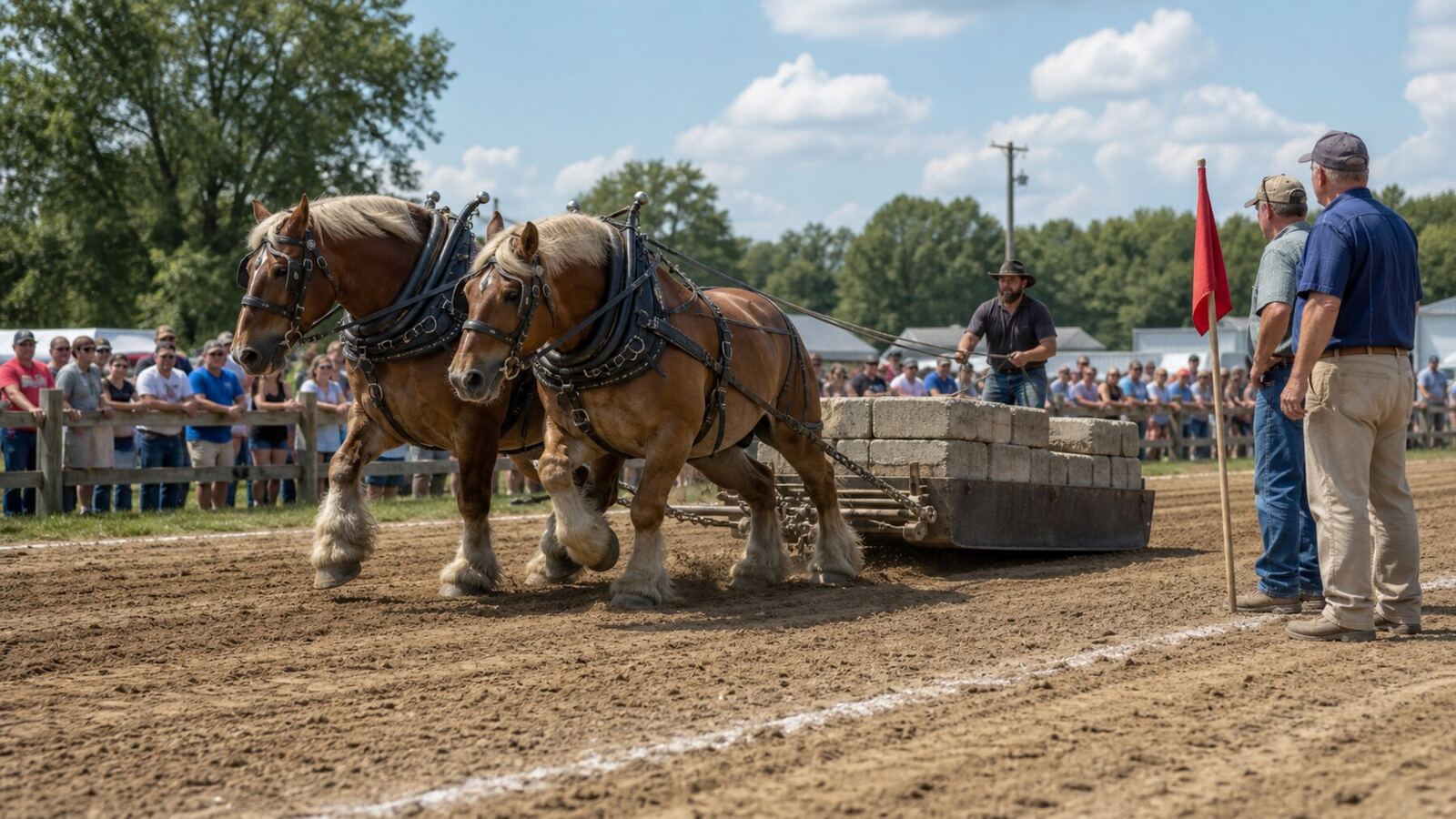
Understand weight classes, stone boats, dynamometers, distance, attempts, boundaries and welfare rules at draft-horse pulls.
Start with the event's own rule book
Pulling rules are not identical across fairs. The Missouri State Fair publishes class and pull provisions, Renfrew Fair sets out its heavy-horse rules, and other events use their own distances, attempt limits and equipment. Read the current sheet at the secretary's office or online. A familiar practice from another state cannot silently replace the host event's wording.
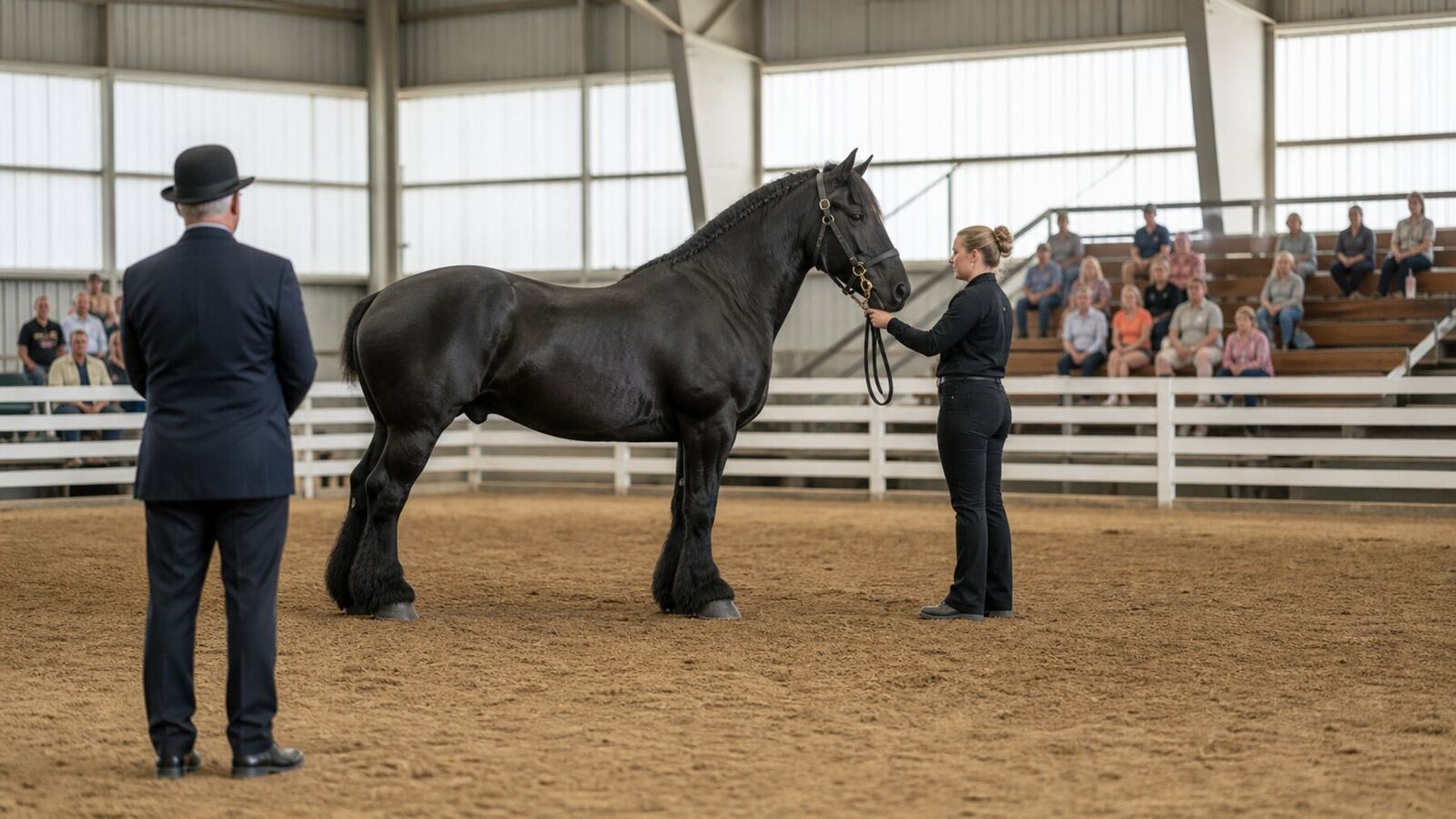
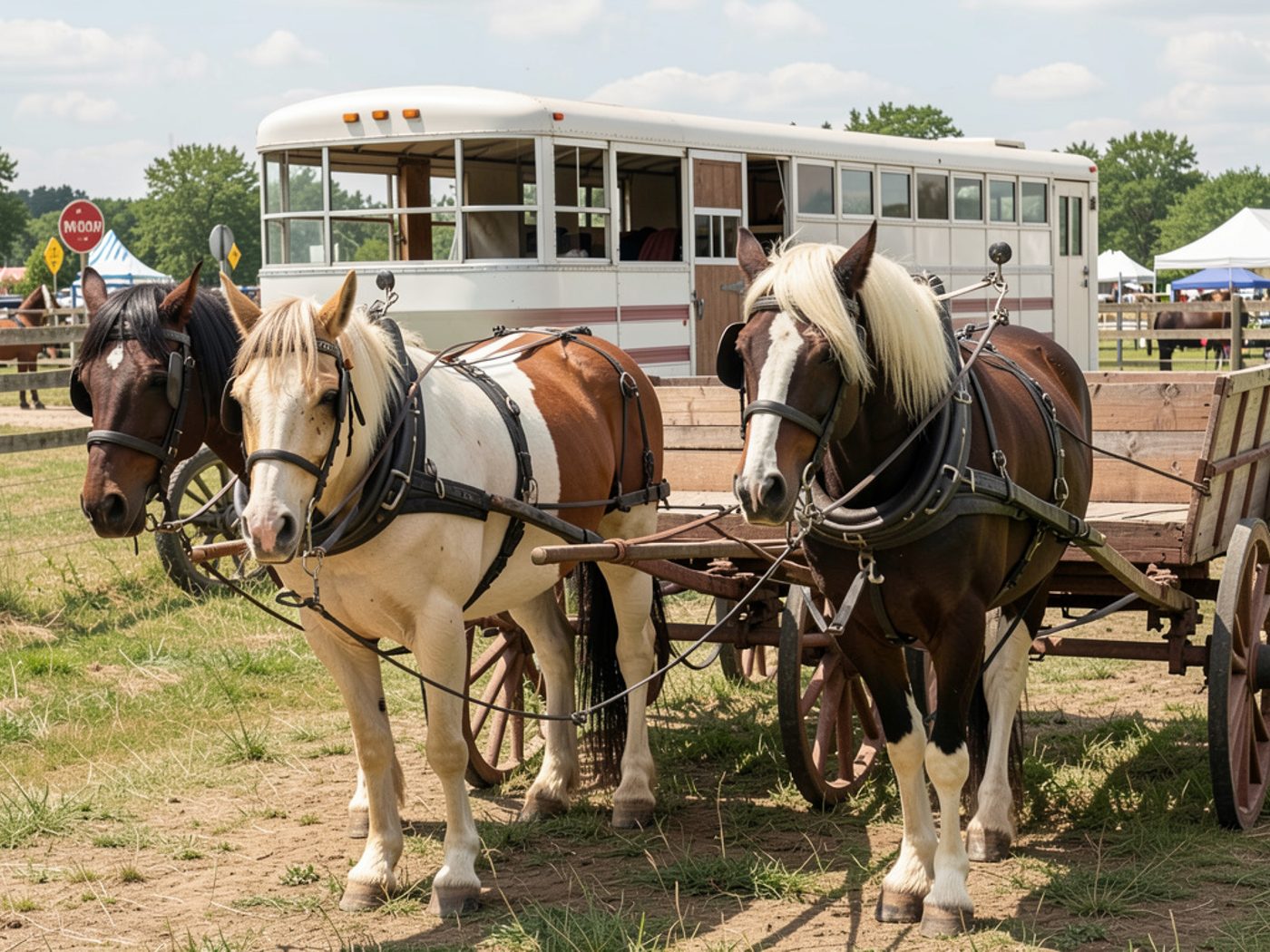
First identify whether the class is for a single horse, pony team or horse team and how the weight class is established. Ask when and where teams are weighed, what allowance applies to equipment and whether reweighing can occur. The class boundary explains who competes together before any load is added.
The rule book is rarely the only paperwork that decides your day. Pulls are almost always scheduled inside a wider civic programme, and the parade, the road closures and the grandstand schedule set the hour at which teams can actually be unloaded. A county account of how a Pennsylvania county keeps its Fourth of July parade is a good illustration of that second timetable, because it names the marshal, the assembly point and the release time. Read it beside the class sheet and the morning stops being a surprise.
Know what is being pulled
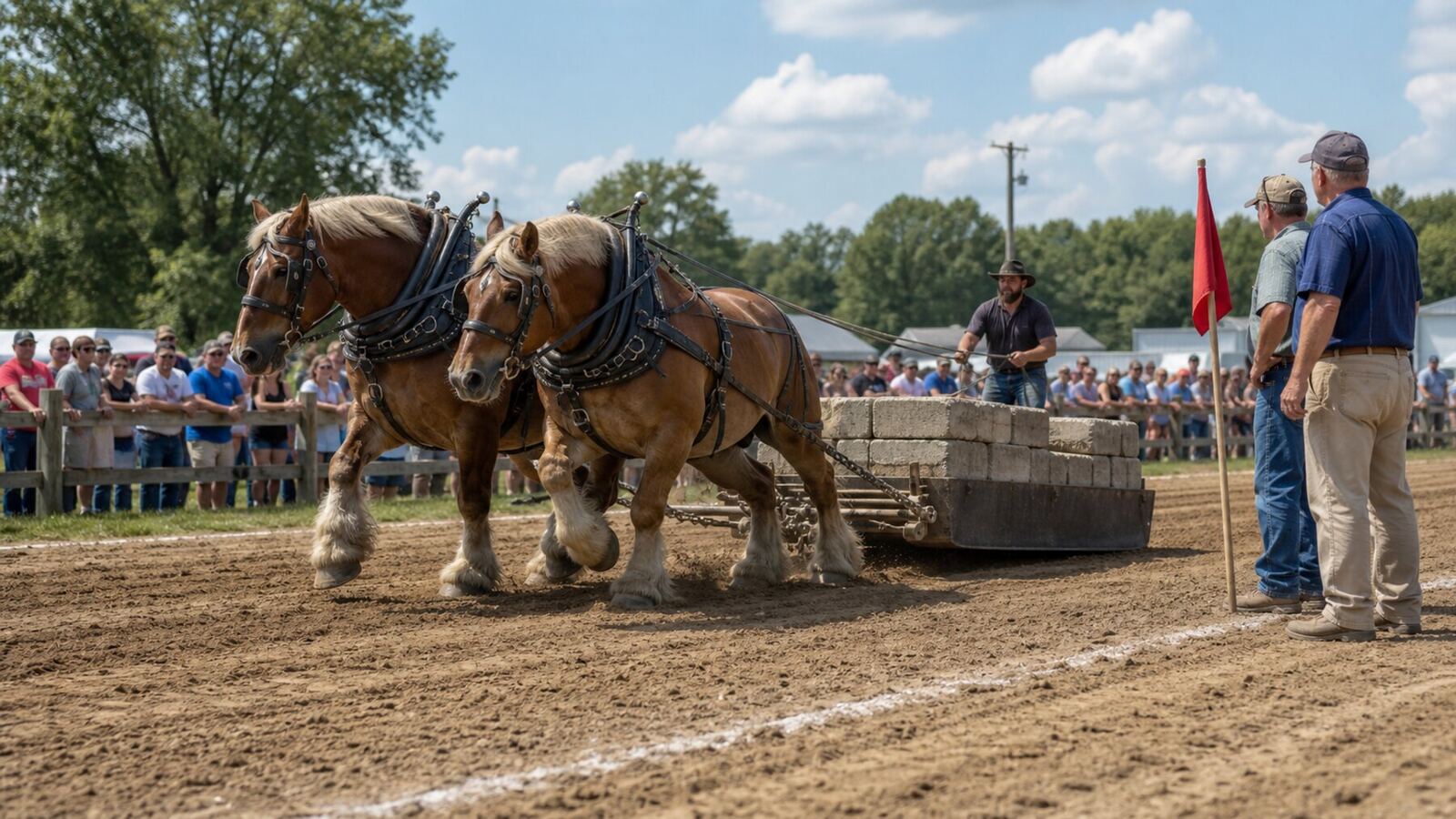
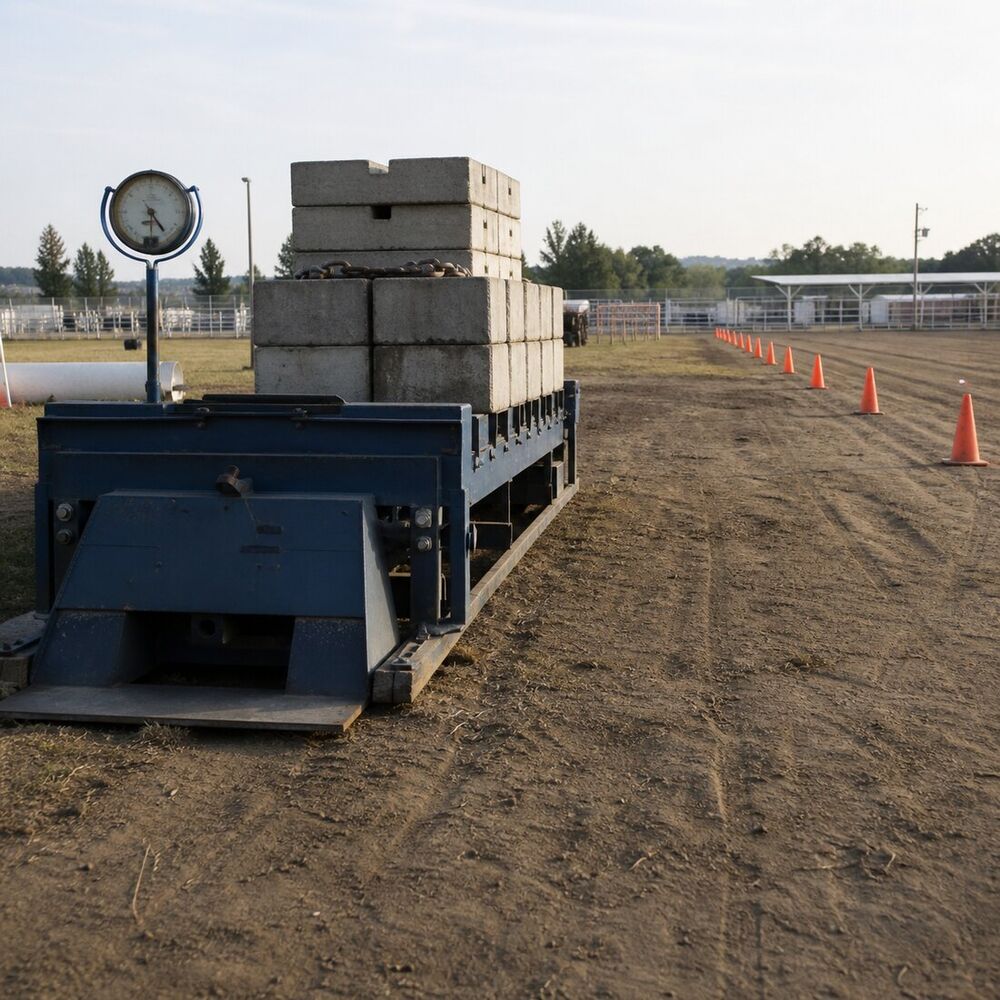
A stone boat receives blocks or other weight between rounds. A dynamometer applies resistance through a mechanical system. Both are called pulling contests, but the announced number may describe different things depending on the equipment. The Big E's historical pulling material, for example, helps visitors recognize the dynamometer tradition at that event.
Officials inspect the lane and machine before competition. Teams should have a straight, consistent surface and a clear connection point. When a load sticks, shifts or the machine malfunctions, the rule book determines whether a repull is allowed. Spectators should wait for the official result rather than treating a visibly difficult trip as a measured win.
Follow distance, time and attempts
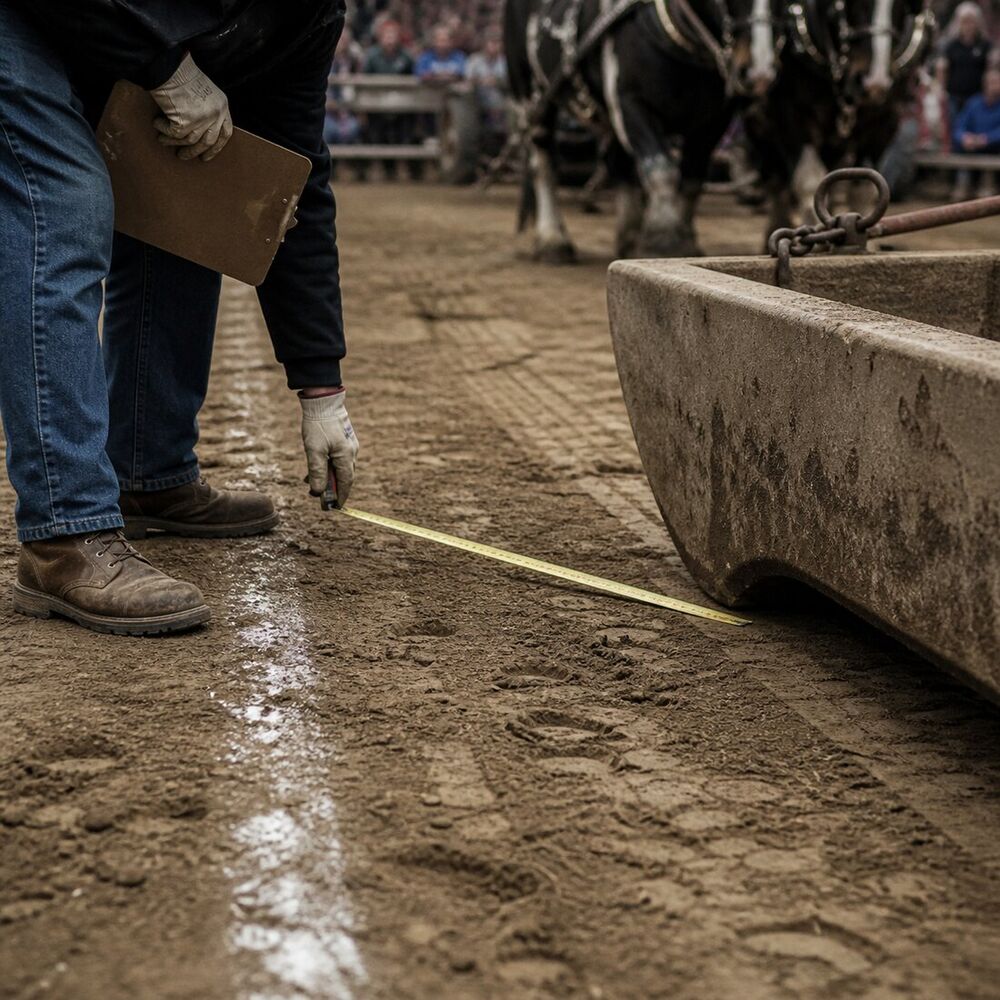
Most contests define a full pull by moving the load a stated distance within the permitted area. If no team completes the distance at a weight, the measured partial distance can decide the placing. Officials also track time, starts and the number of attempts allowed. Crossing a boundary, unhitching or changing position may be governed by specific local language.
The cleanest way to follow a class is to record team number, round weight, full pull or measured distance, and remaining attempts. Do not compare a partial distance from one weight with a full pull at another as if they were the same achievement. The sequence of increasing load matters.
Understand the officials' roles
A judge or superintendent controls the class, while other officials may measure, add weight, operate the machine, inspect hitches and record results. The announcer communicates the decision but does not necessarily make it. Safe positioning is part of the procedure because horses, chains and a loaded sled create a large moving system.
Handlers and helpers must follow the event's directions about the pulling area. Extra people, striking, prohibited equipment or delayed hitching can carry penalties. The exact sanction comes from the rules. Good officiating keeps the same standard visible across teams and pauses the class when equipment, footing or conduct makes continuation unsafe.
Animal welfare is part of the result
Current fair rules commonly include conduct, equipment and animal-health provisions, and some events include drug testing or veterinary authority. Read the host policy rather than assuming a general standard covers every detail. A placing should never be interpreted apart from whether the team remained eligible under those provisions.
Spectators can watch for calm handling, sound equipment, adequate recovery and officials who intervene when necessary. Effort is expected in a pull, but distress is not entertainment. Concerns should be raised with event management through the fair's stated process, not by entering the working lane or confronting a handler beside the team.
Judging a pull and photographing one both come down to watching carefully and knowing the rules before the load moves. Officials read the dynamometer, the distance and the boundaries; a photographer reads light and timing. If you want to bring a camera to the next event, the guide to exposure settings for animals in motion explains shutter speeds for a galloping dog, respectful horse photography at trot and canter, and a workflow for sorting, archiving and printing. Check your settings before the first attempt, the same way you check the rule book.
Read the final sheet accurately
The final sheet should identify class, teams, loads, distances and placings. Ties may be resolved through additional pulls, team weight, time or another stated method. Note scratches and disqualifications separately from a zero distance. A team that does not return for a later round did not necessarily fail the earlier load.
Comparisons between events require caution. Different machines, surfaces, distances, weather and rules make a raw weight an incomplete statistic. The most credible account names the event, date, class and equipment, links to the rule set and reports the official result. That context turns a spectacular number into a result another reader can actually understand.
Judging a draft-horse pull and judging a working dog trial share a habit: the rule book decides before the animals move. At a pull, officials read weight classes, the stone boat or dynamometer, distance, time and attempts, and welfare rules sit inside the result, not beside it. A reader who wants to see the same logic applied elsewhere can look at scoring a sheepdog outrun, where novice spaniel classes, outruns and a first canicross or bikejor season are explained for newcomers at the field edge. The next check is the same on both days: find the written rules first.
Sources and further reading
Documents used for this guide
- Missouri State Fair draft horse and pony pull rules
- Renfrew Fair heavy horse prize list and rules
- The Big E draft pulling historical brochure
Rules and recommendations can change. Check the linked publisher and the professional responsible for the individual horse before acting.