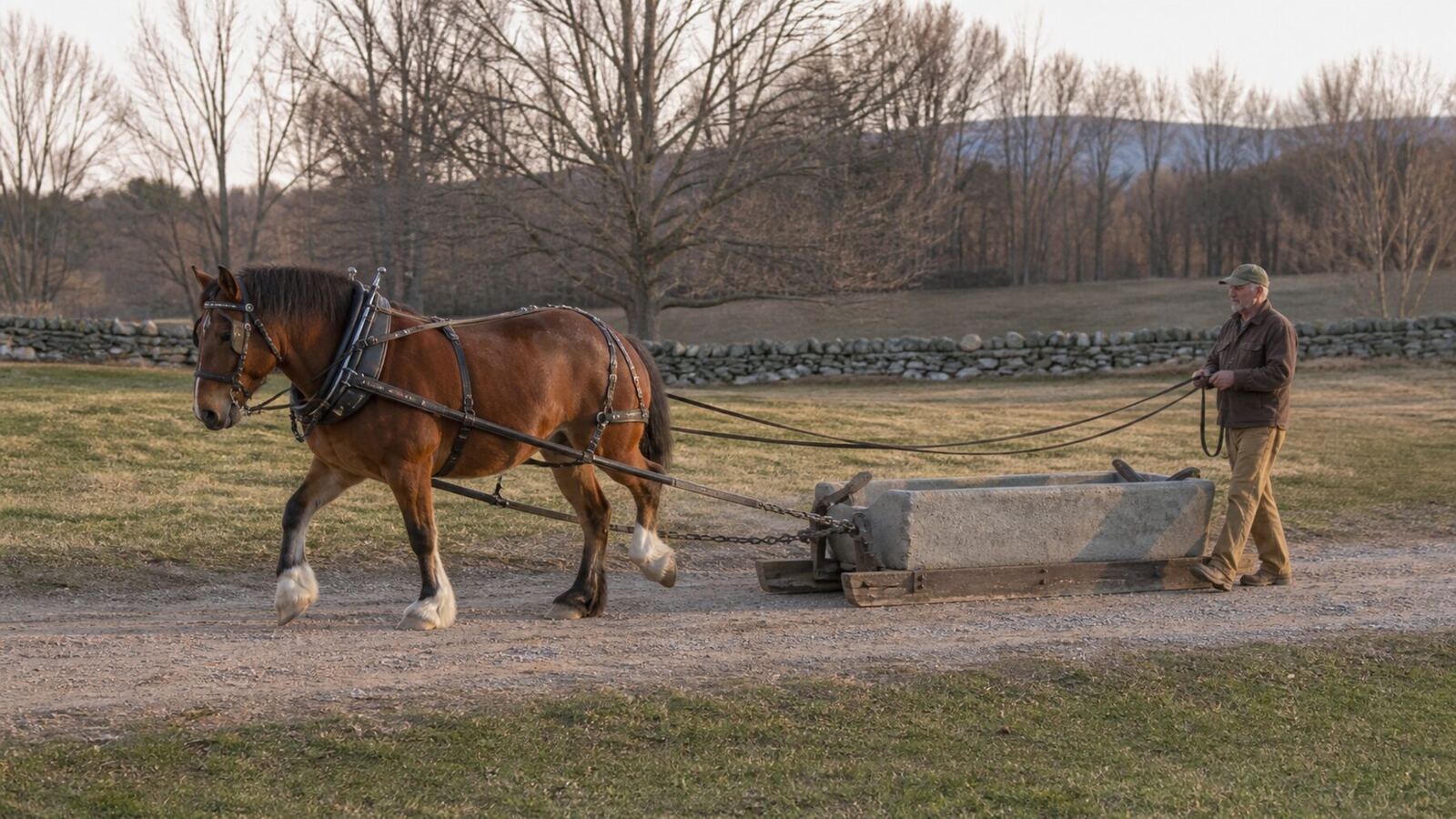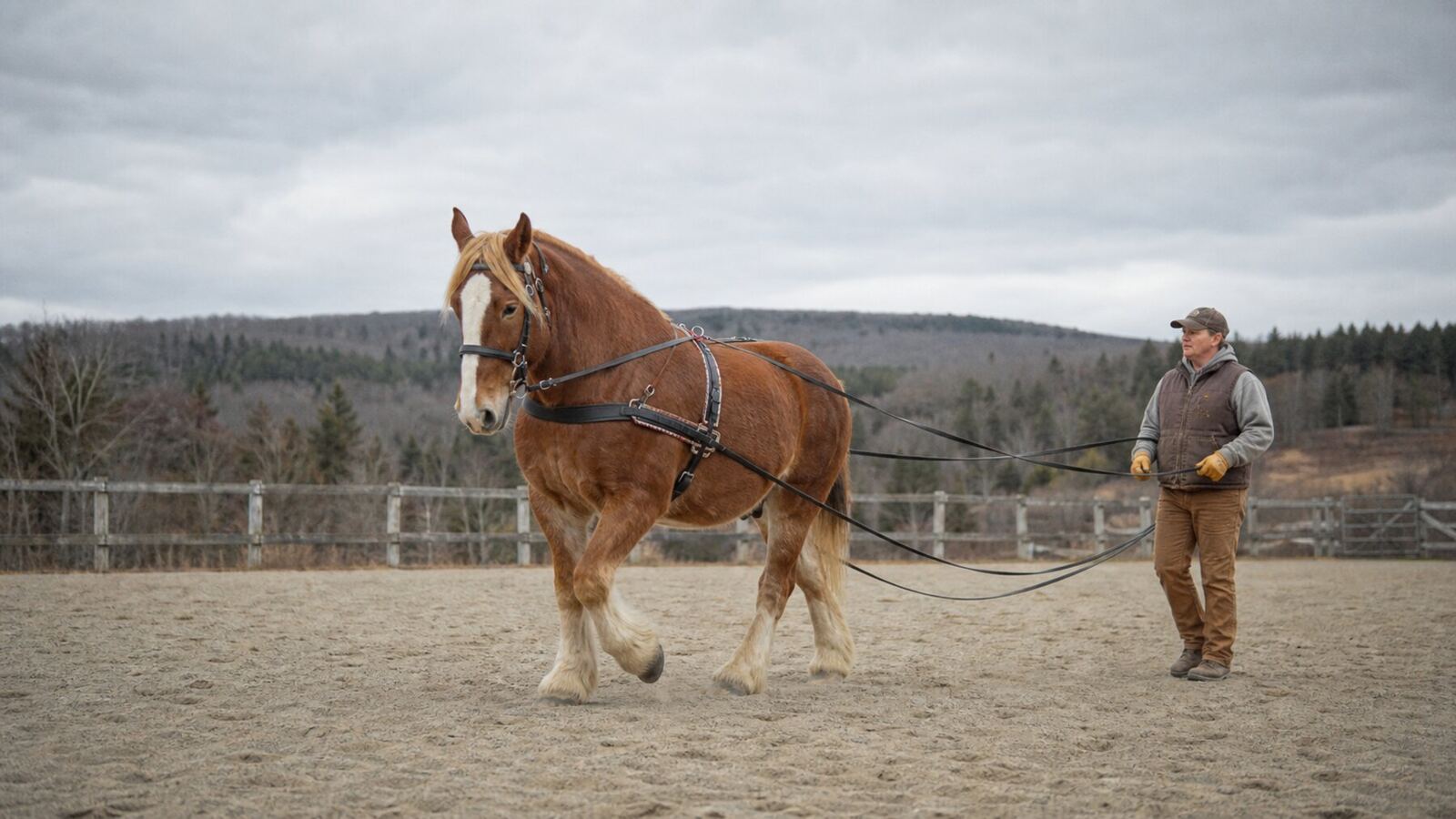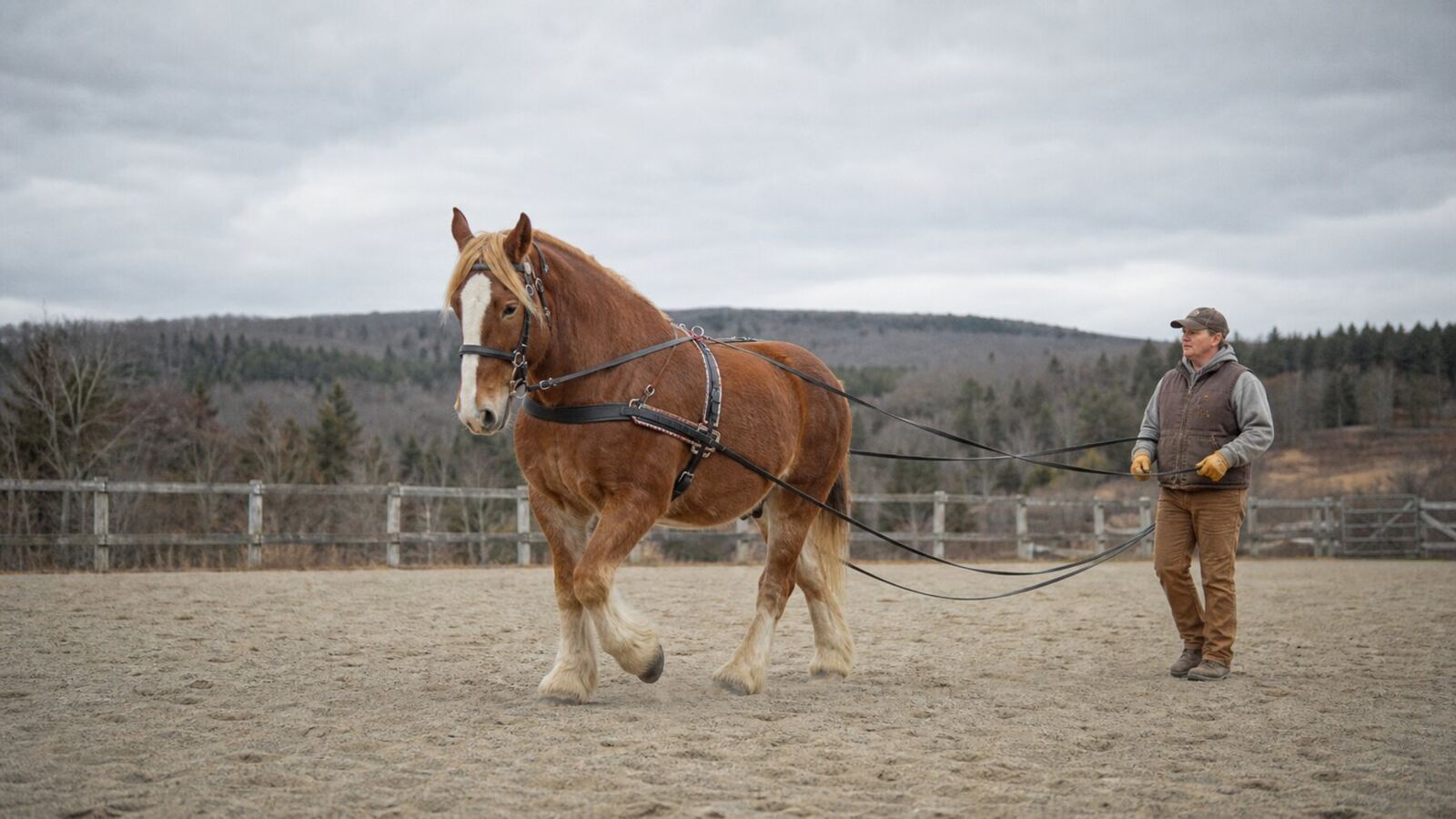
A progressive groundwork plan for leading, standing, voice cues, long lines and safe preparation for draft work.
Define the response before asking for it
Choose a small vocabulary and use it consistently. The Oregon State 4-H Driving Manual includes clear voice commands such as walk, trot, whoa and stand as part of driving preparation. Decide what each cue means on your farm: how promptly the horse should begin, how long a stand lasts and what body position is acceptable. Everyone handling the horse should know the same words and release.
A draft horse can accidentally reward an unclear handler simply by moving people with its size. Work in a secure, level area with gloves, suitable footwear and equipment that fits. The first criterion is not speed. It is whether the horse can attend without crowding, pulling away or becoming trapped between pressure and an obstacle.
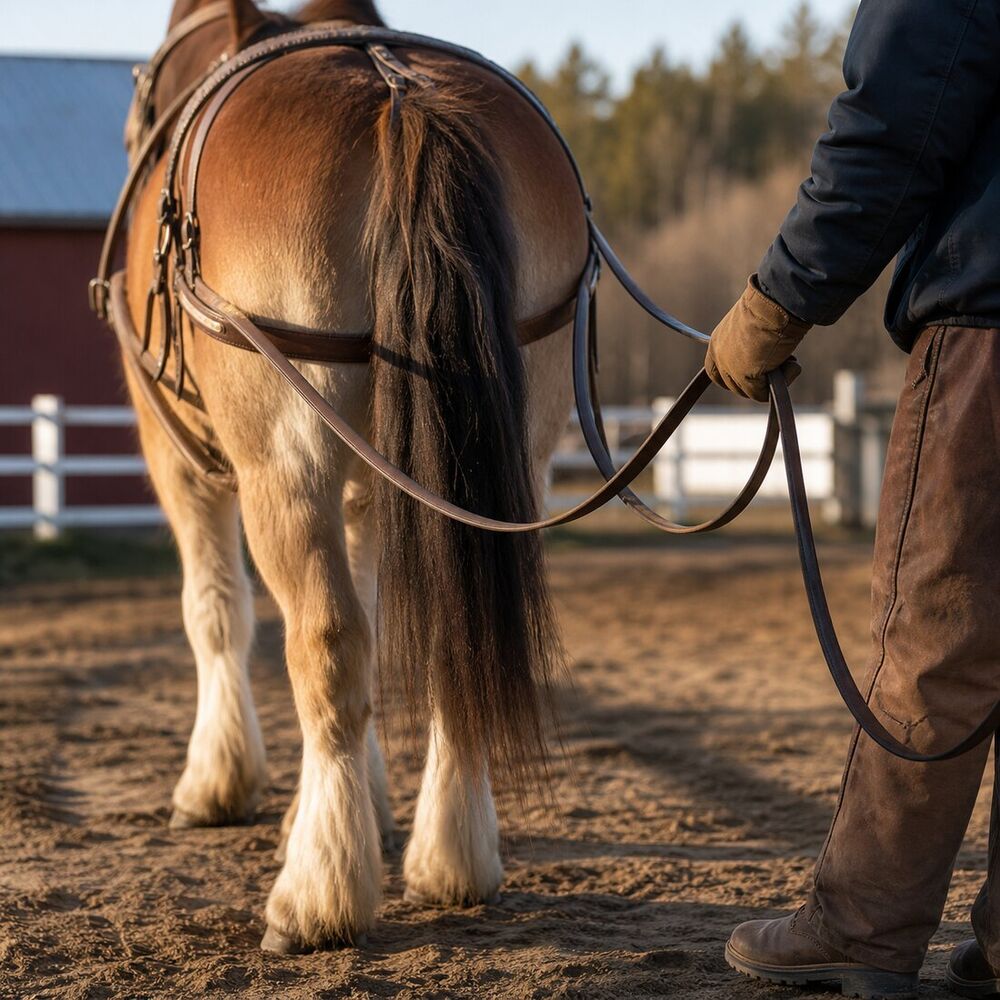
Make leading and standing measurable
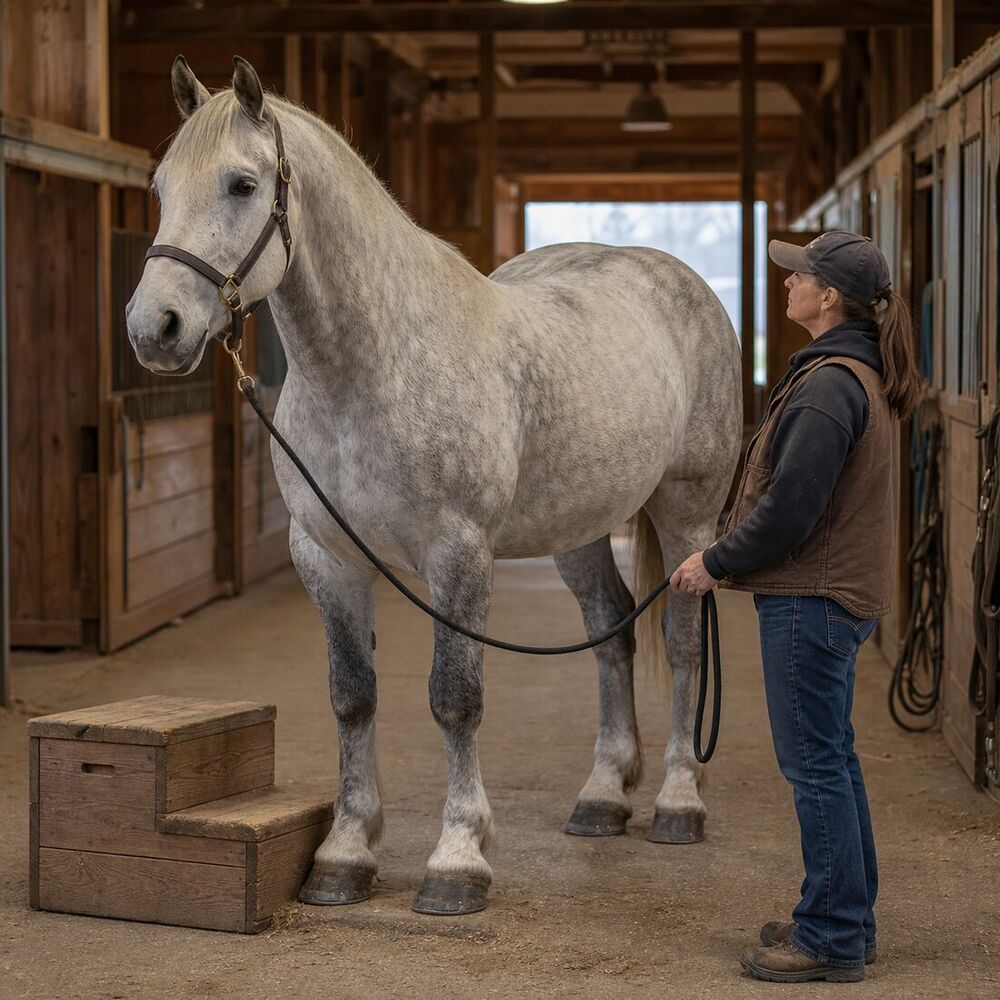
Lead from both sides where the horse's training and safety allow. Practice a straight departure, a halt without swinging the hindquarters, a step back and a turn that gives the shoulder room. Use light, steady information followed by a clear release when the response arrives. Repeated jerks make the cue harder to distinguish and can teach the horse to lean into pressure.
Treat standing as an active lesson. Begin with a few quiet seconds, then release before attention leaves. Increase duration, distance and distraction one variable at a time. Grooming, harnessing and gate work all test the same skill, but they should not be the first place it is taught. If the feet continually drift, shorten the request and clarify the boundary rather than holding harder for longer.
Use circles to improve attention, not exhaust the horse
Longeing can confirm voice cues, rhythm and changes of direction, but endless small circles add physical strain without necessarily improving understanding. Use a circle large enough for balance, watch the footing and keep sessions brief. The handler should be able to influence direction and tempo while staying outside the horse's kick zone and away from a line wrapped around any body part.
Look for a regular walk, an attentive inside ear and a transition that comes from the cue rather than from chasing. If the horse falls inward, accelerates or faces the handler, simplify. Return to leading on straight lines, check equipment and rebuild the cue. Groundwork earns progression by quality, not by completing a fixed number of laps.
Introduce long lines in stages
Before stepping behind, teach the horse to accept a line along the shoulder, side and hindquarter. An assistant at the head can help during early sessions when both people understand their roles. Start from a position where the handler can see the horse, preserve an escape route and avoid standing directly behind. Practice wide turns and straight tracks before tight figures.
Long lines reveal whether voice and rein aids agree. Use the line to guide, not to hold the horse together. A soft bend and steady rhythm matter more than a perfect arena shape. If a line catches under the tail, around a hock or on equipment, stop the session safely and correct the setup. Do not try to drive through a tangle.
Prepare for sound, touch and movement
A future driving horse must accept straps, traces and objects moving in its peripheral vision. Present each sensation at an intensity the horse can notice without losing the learned response. A rope against the side, a light object dragged at a distance and a stationary shaft beside the body are separate lessons. The goal is calm recognition, not immobility produced by overwhelming exposure.
Allow the horse to look, then ask for a familiar task and release when attention returns. Work on both sides because acceptance does not always transfer. Record which sound, surface or contact changed the response. That note tells the next handler where to begin and prevents a single quiet session from being mistaken for complete preparation.
The payoff of gradual exposure shows up away from the arena. When the work reaches a fair or a street appearance, the guide on taking a horse to a public event puts the training beside the practical checks: forecast, parking, water and the ride home.
Groundwork teaches a horse to answer pressure before it is asked to pull, and the same logic of defined steps and clear criteria shows up in other working breeds. Owners who want to see how a formal progression is structured, from an entry test through higher levels, can read the BH-VT to IGP work ladder, a field guide to the Belgian Tervueren in Saarland that covers the FCI standard, breed papers, and the local rules owners meet. The comparison is useful: both paths reward patience, recorded progress, and a horse that understands the question before the demand increases.
Choose progression criteria
Move toward shafts or resistance only when the horse can lead, halt, stand, back, turn and follow voice cues in long lines on more than one day. Add one new demand while keeping the location and helper familiar. The first object should be light, predictable and easy to release. Check harness and lines before every repetition, even if the previous one was uneventful.
End while the horse still understands the work. Write down duration, footing, equipment, successful cues, points of tension and the next small step. A willing draft horse is not one that never hesitates. It is one that has learned the handler will make requests understandable, notice uncertainty early and avoid turning confusion into a contest of strength.
Groundwork teaches a horse to read pressure before it moves, and the same patience applies to people who want to work in animal health. If you are weighing that step, the animal health training route lays out entry without Abitur, what the curriculum covers, and how distance study compares with classroom hours. It answers the questions a handler asks before committing: cost, duration, and what the title is worth. Read it the way you read your horse, slowly, and decide your next check before you ask for more.
Sources and further reading
Documents used for this guide
- Oregon State University Extension: 4-H Driving Manual
- Oregon State University Extension driving resources
Rules and recommendations can change. Check the linked publisher and the professional responsible for the individual horse before acting.