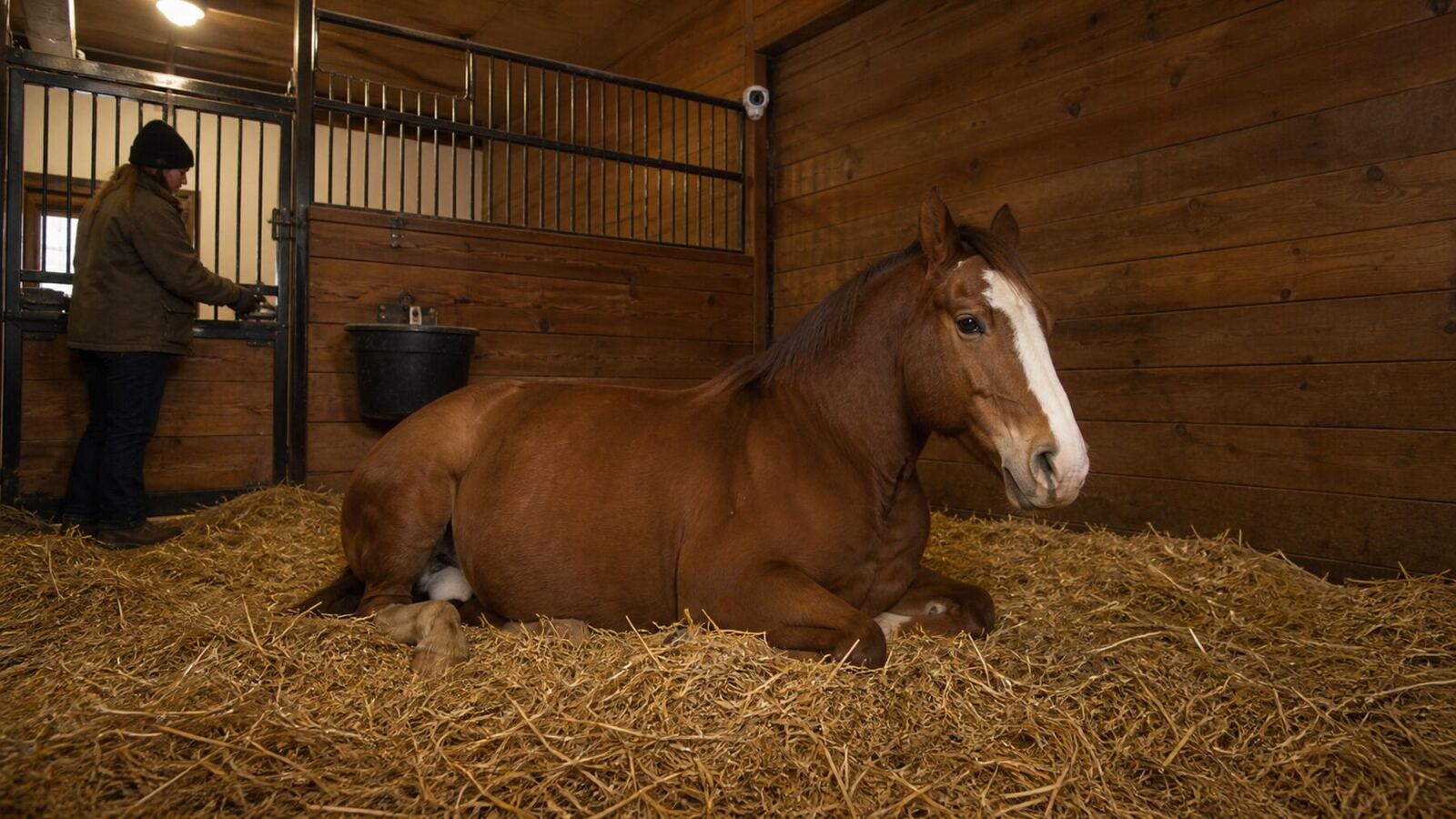
Organize the mare, foaling space, supplies, observation record and emergency contacts before labor begins.
Make the veterinary plan first
Discuss the mare's expected window, previous foaling history and any known risk with the attending veterinarian well before the due period. Save the regular and after-hours numbers in more than one phone. Write the farm address, gate instructions and the safest route for a truck. Decide who can authorize treatment if the owner is absent, and confirm that the trailer and towing vehicle are available rather than blocked behind seasonal equipment.
Penn State Extension notes that normal equine gestation varies widely, commonly around 330 to 370 days with an average near 340. A calendar estimate is therefore a monitoring window, not an appointment. Changes in udder, pelvic ligaments, behavior and secretions can add context, but no single sign reliably supplies an exact hour for every mare.
Move the mare before the last minute
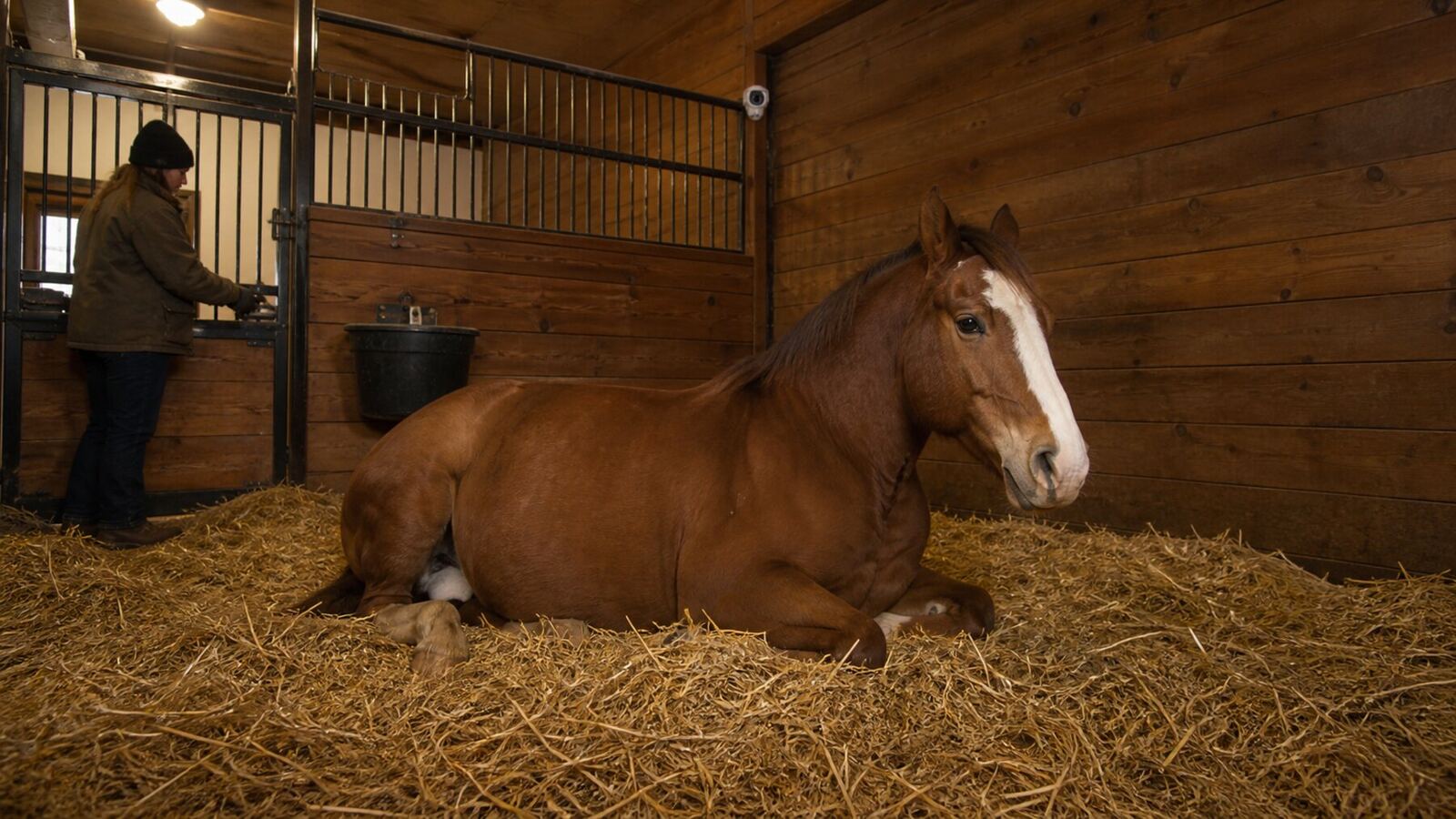
Give the mare time to learn the foaling space, water source, neighboring horses and night routine. A large draft mare needs room to lie down, turn and rise without becoming trapped against a wall, feeder or door. Inspect boards, fasteners, bucket handles and gaps at foal height. Provide secure footing and the bedding recommended by the veterinarian and farm protocol, then keep the area dry and free of sharp hardware.
Reduce unnecessary changes in handlers, feed and turnout close to the expected period. Keep routine hoof care and vaccinations on the veterinarian's planned schedule. Observe appetite, manure, movement and comfort as individual baselines. A note that says 'different tonight' is far more useful when yesterday's normal behavior was actually recorded.
Build a clean, modest kit
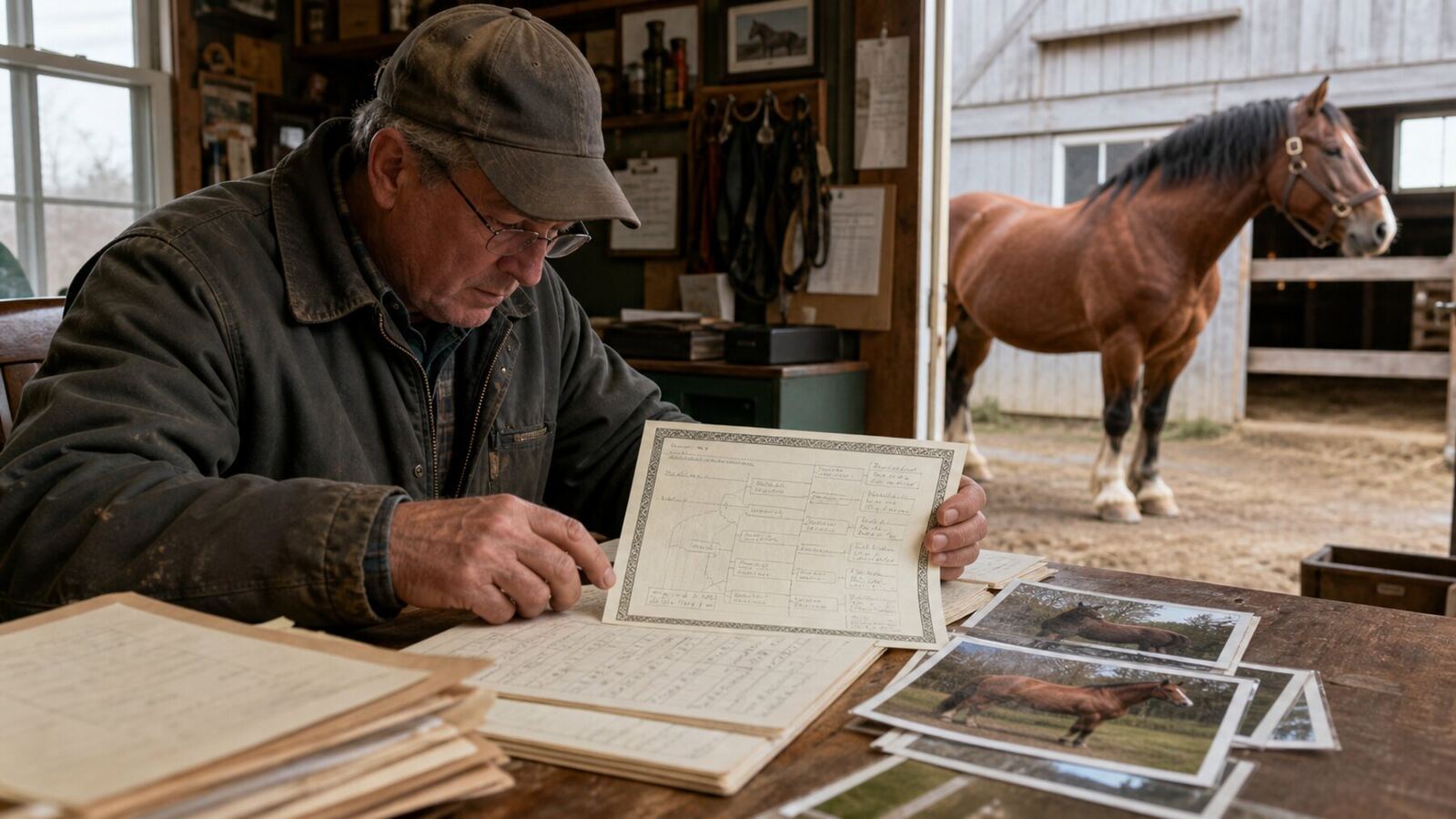
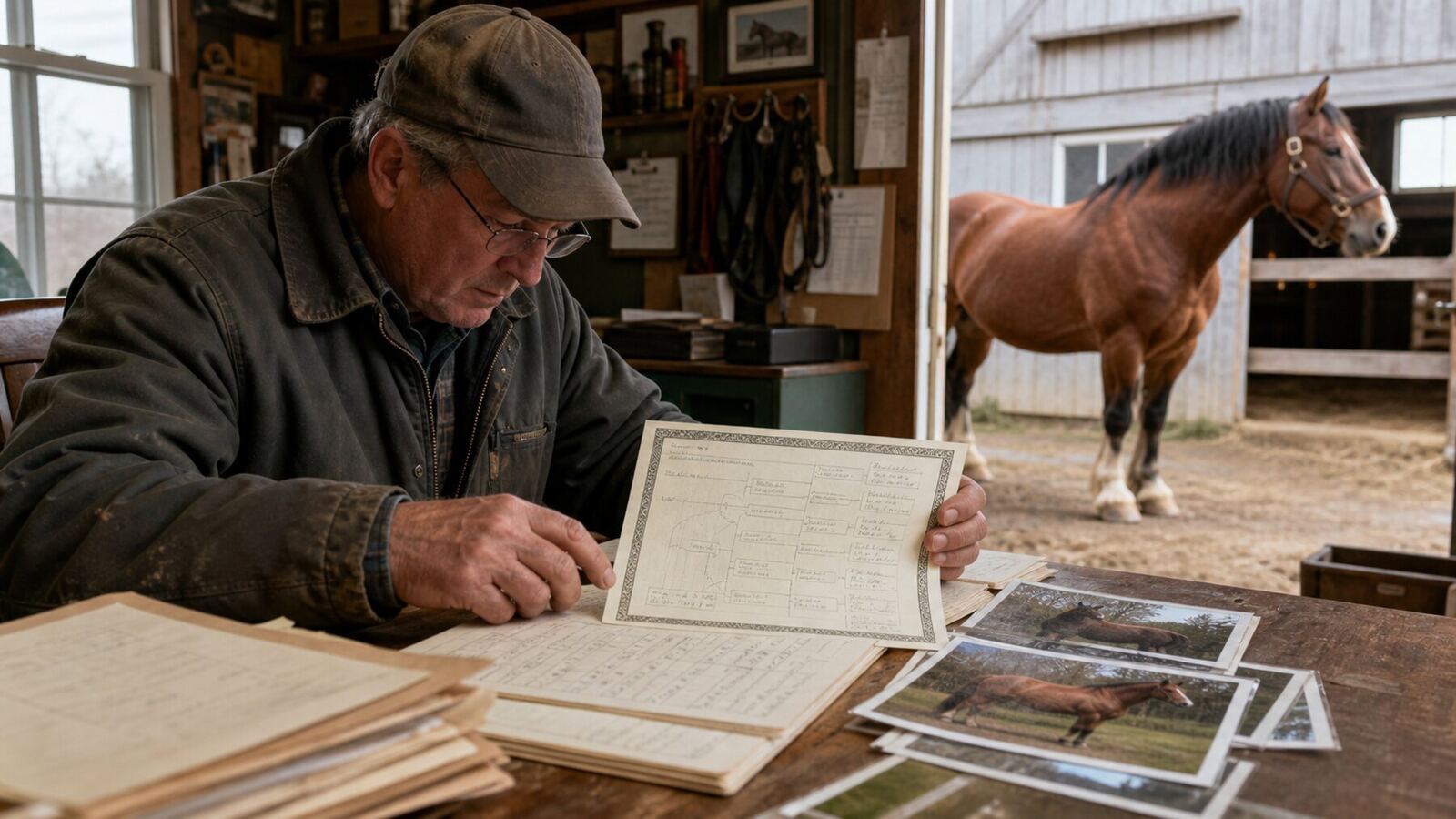
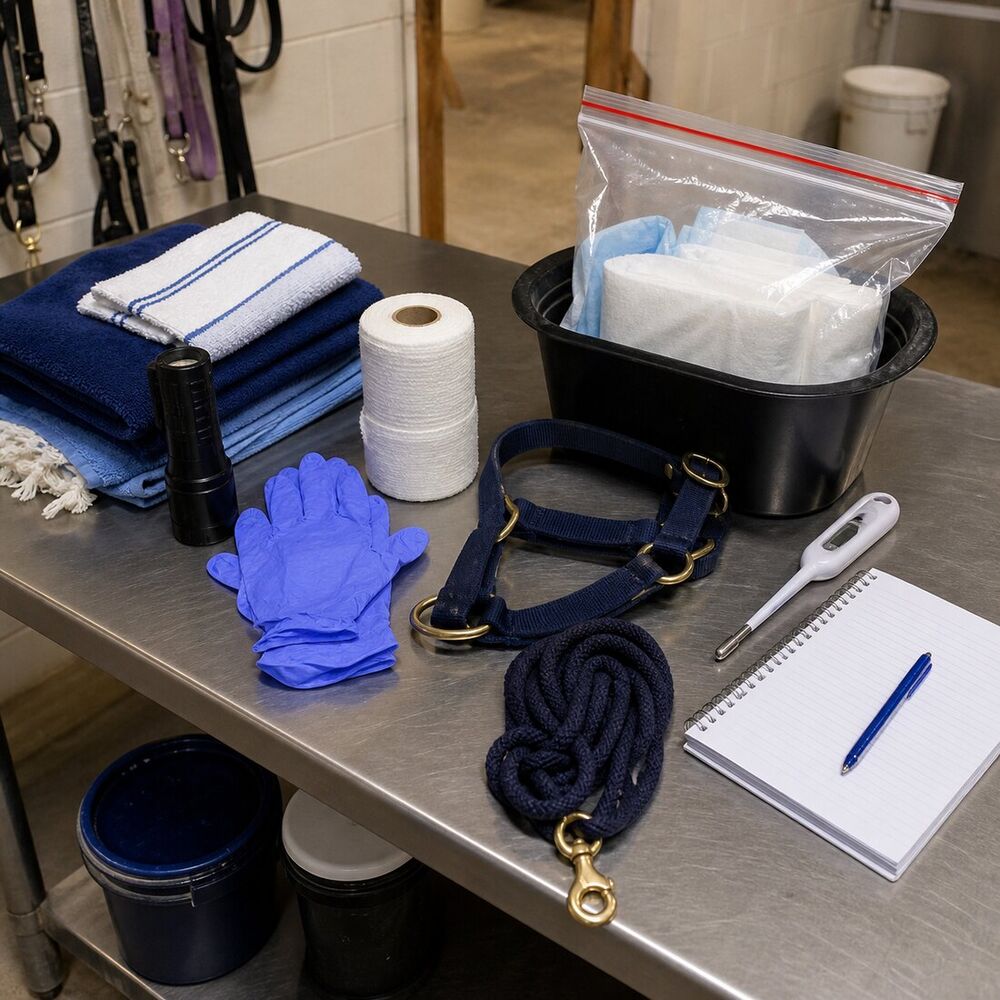
Store clean towels, disposable gloves, a working flashlight with spare batteries, a watch or timer, clean tail wrap, trash bags and the veterinarian-approved supplies in a washable container. Add a headlamp so one person can keep both hands free. Keep a separate notebook or printed record with the mare's identity, breeding dates, medications, allergies, veterinarian instructions and emergency contacts.
Do not let a large kit create false confidence. Instruments, medications and invasive procedures require training and veterinary direction. The practical value of the kit is speed and organization: the tail wrap is clean, the light works, the phone number is visible and observations can be timed accurately. Replace opened, expired or contaminated items after every use.
Know the sequence and the stop points
Foaling is commonly described in three stages: early labor and repositioning, active delivery, then passage of the placenta. Penn State's foaling guidance says active delivery is usually rapid and that failure to make progress, abnormal presentation or a red membrane instead of the expected pale sac requires immediate veterinary attention. The farm's written thresholds should come from its veterinarian, because waiting to look them up during a difficult delivery wastes critical time.
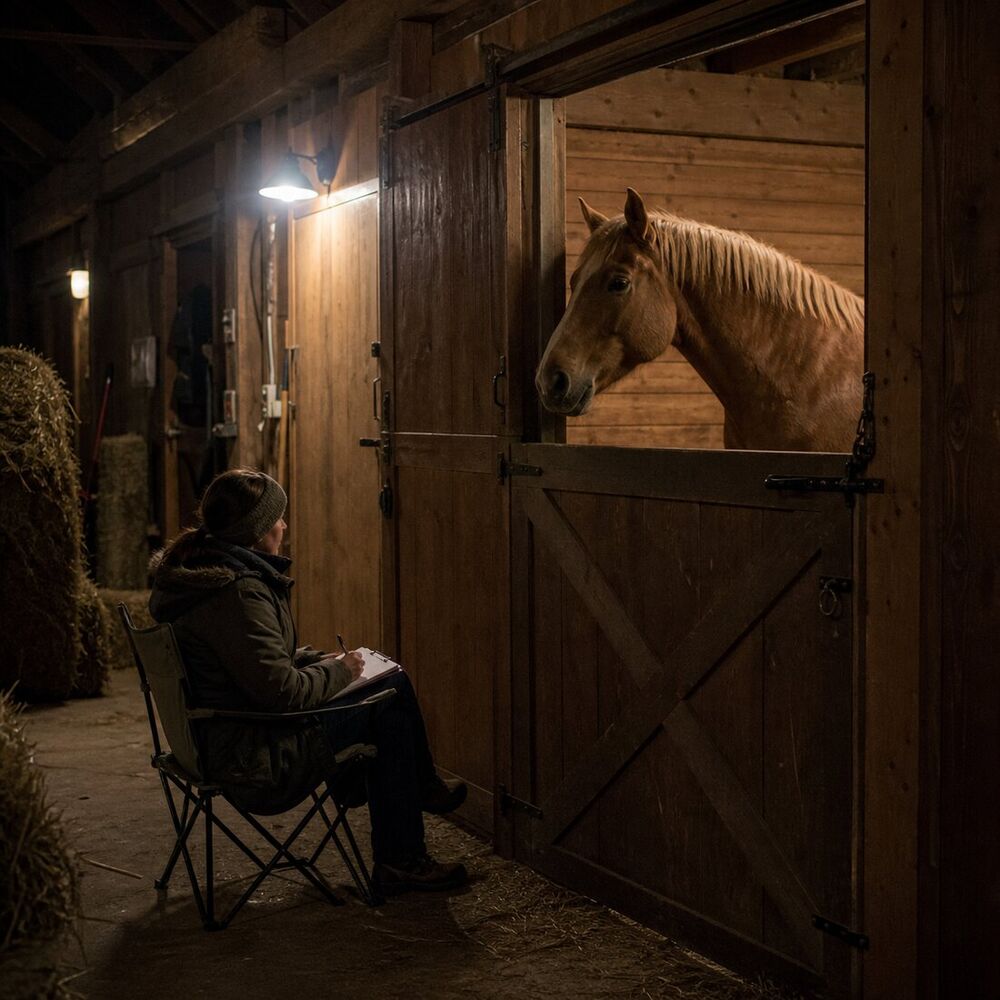
Observe quietly from a position that does not repeatedly disturb the mare. Record when clear changes begin, when water breaks, what structures appear and whether progress continues. If the plan says call, call first. A draft mare's size does not make prolonged effort normal, and extra pulling by untrained helpers can injure mare and foal.
Watch the mare, foal and placenta
After delivery, follow the veterinarian's plan for breathing, bonding, standing, nursing, navel care and examination. Penn State advises tracking the foal's early milestones and the mare's passage of the placenta. Keep the placenta for professional inspection in a clean container rather than discarding part of it. Record time, behavior and any treatment given to either horse.
Continue checking the mare's comfort, appetite, temperature if instructed, udder and interest in the foal. Observe the foal for repeated attempts to rise, coordinated movement, nursing and elimination. A quiet foal is not automatically a resting foal. When a milestone is late or behavior concerns the observer, the written emergency plan should replace debate in the aisle.
Foaling preparation and livestock guardian work share the same logic: decide the plan before the event, then watch closely. If you also keep a white Hungarian guardian, the target page on the Kuvasz covers the FCI standard, socialising a Kuvasz puppy, the health risks that matter in the breed, and what a first-time owner should expect. Read it the way you read this page: as a checklist of decisions made early, so that the night itself is only observation, and the veterinary plan, the clean kit, and the emergency contacts are already in place.
Close the loop after the event
Within a day, clean and restock the kit, copy the timeline into the mare's permanent record and note what was difficult to reach or understand. Update photographs and registration notes only after immediate health needs are addressed. If several people shared the watch, compare their notes while details are fresh and keep factual observations separate from later interpretation.
A safe foaling plan is a working document. Review it with the veterinarian after an uncomplicated birth as well as after a problem. Door latches, lighting, camera angles and phone coverage are easier to improve now than during the next labor. The measure of preparation is not how much equipment the barn owns, but how quickly the right observation reaches the right person.
The same discipline that governs a foaling stall governs a breeding file: write the plan before the event, not after. Dutch collie owners read the standard first, then the pedigree, then dated health results, and they schedule tests before a litter is planned. That order maps onto mares here. Set the veterinary plan, move the mare early, build a modest kit, and record the sequence and stop points. If you want one example of paperwork done in that order, see collie health tests in the Netherlands. Then close the loop after the foal arrives.
Sources and further reading
Documents used for this guide
- Penn State Extension: Foaling season tips for delivery
- Penn State Extension: When to call the equine veterinarian
Rules and recommendations can change. Check the linked publisher and the professional responsible for the individual horse before acting.