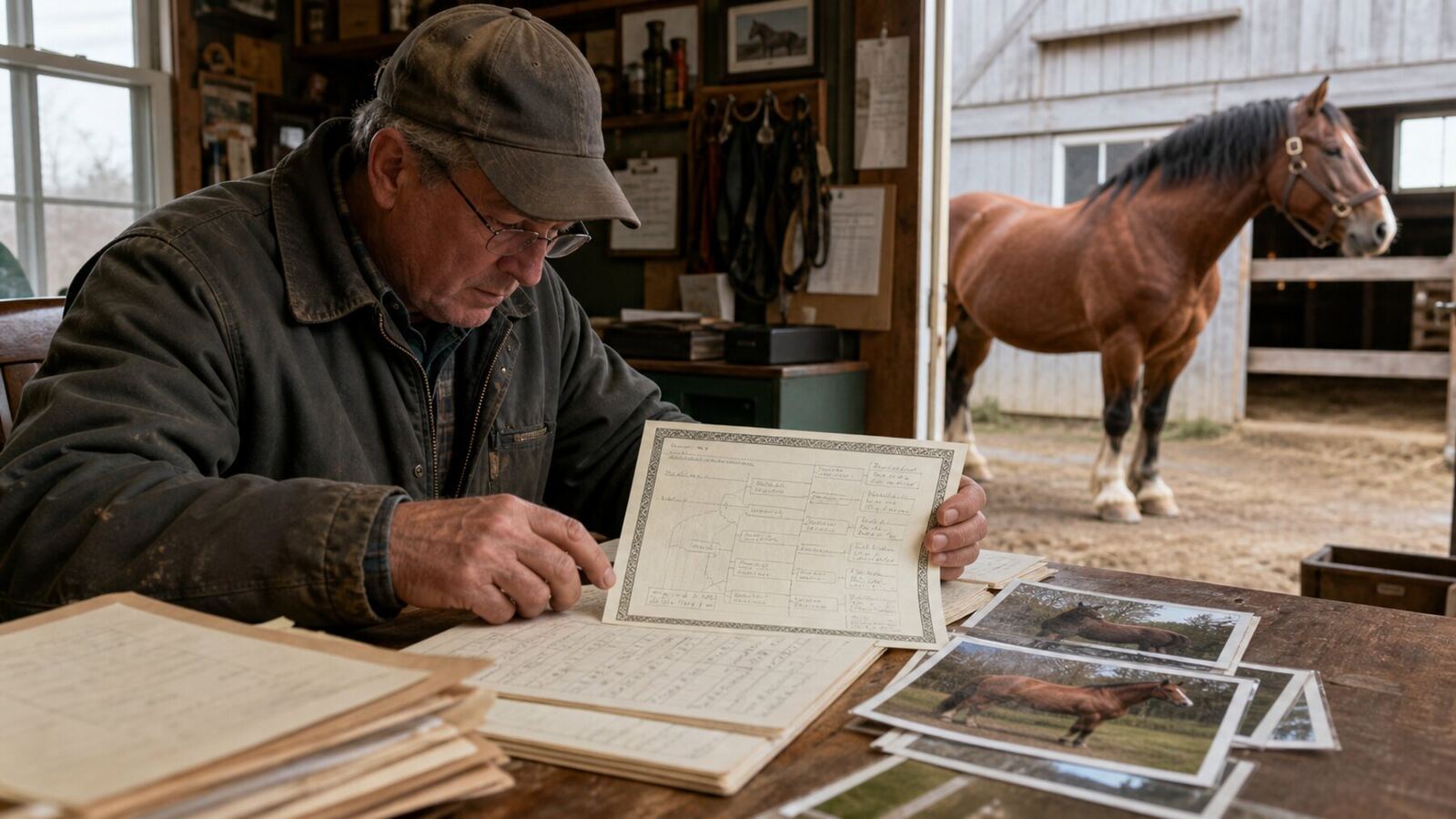
A practical method for checking identity, ancestry, conformation, health records and working evidence before choosing a draft stallion.
Begin with identity, not reputation
Confirm that the registration number, sex, color, markings, foaling date and current owner refer to the horse in front of you. Ask to see the original certificate or a current registry record, then compare permanent markings and any required identification. A famous farm prefix or repeated name can sound persuasive, but it is not a substitute for a clean identity trail. Record discrepancies before discussing breeding value, because every conclusion built on the wrong individual is unreliable.
Registry practice changes over time. The Belgian Draft Horse Corporation of America, for example, announced DNA requirements for stallions used for breeding beginning with its 2026 rule update. Other associations have their own parentage, transfer and naming provisions. Verify the current rule with the relevant registry rather than assuming that a certificate from an earlier decade proves the same things as a current file.
Read three generations as evidence, not decoration
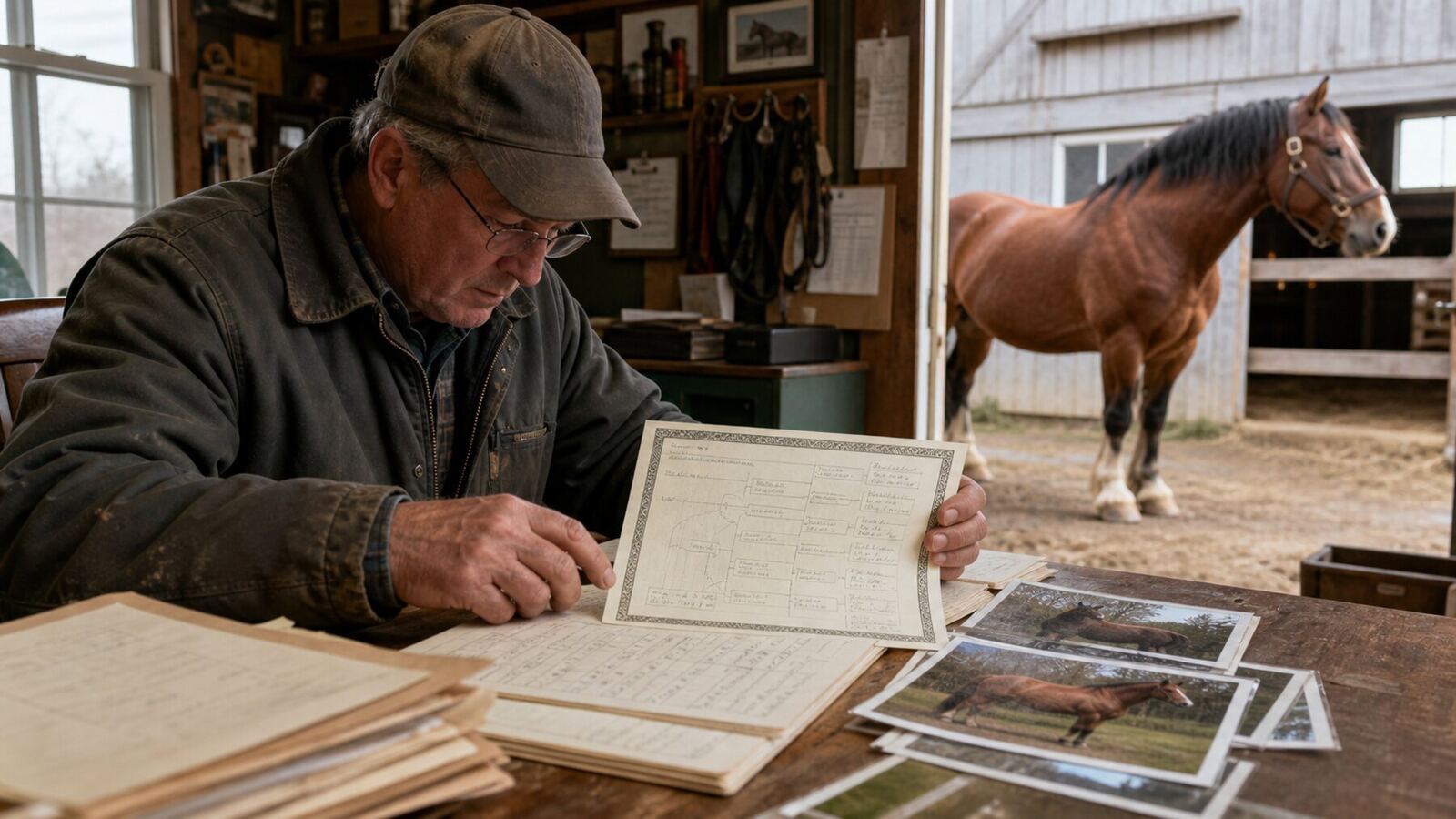
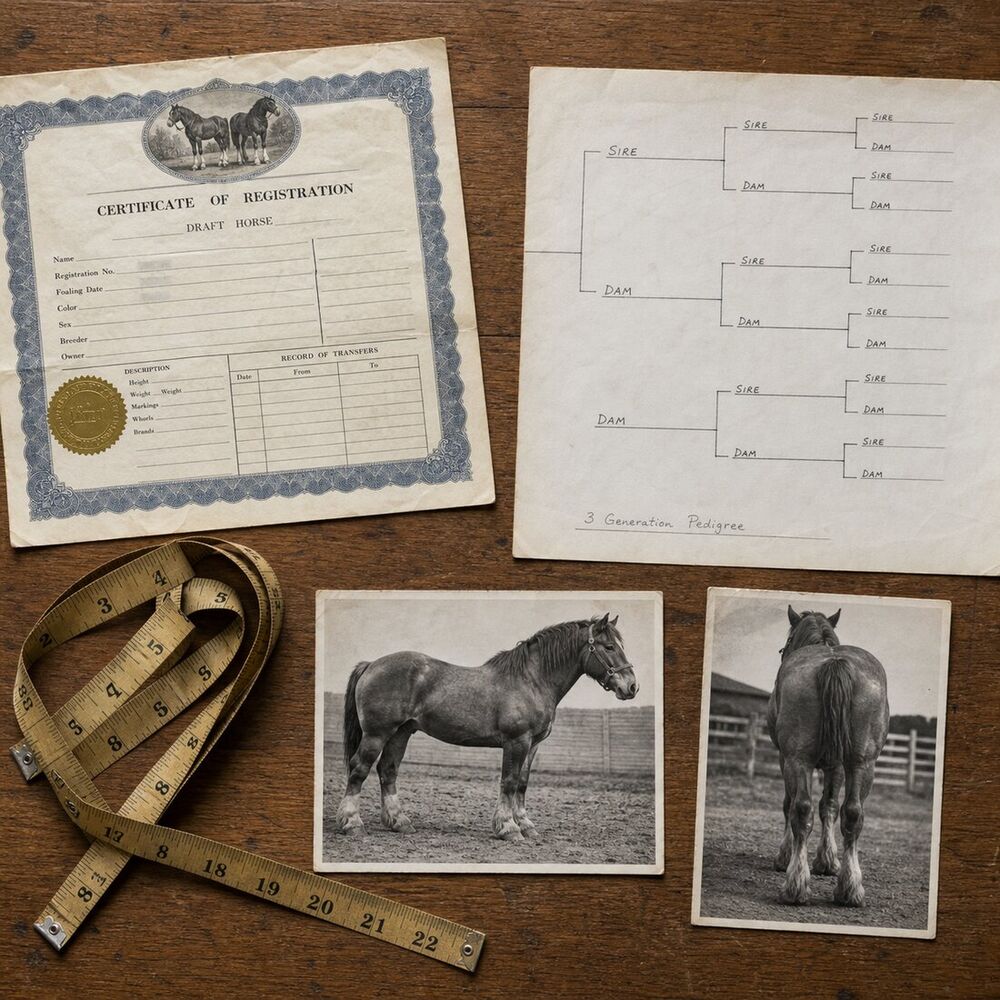
Move through the sire and dam sides separately. For each parent and grandparent, note breed registry, foaling year, breeder, ownership changes and any documented offspring. Repeated ancestors may indicate deliberate linebreeding, but repetition alone does not reveal whether the result was useful. Look for consistent records across siblings and progeny instead of selecting one celebrated name from the chart.
Write down what each claim is based on. A show placing, a registry inspection, a pulling record and a farm's description of daily temperament are different kinds of evidence. None should be silently converted into another. A stallion can be successful in a halter ring without having a documented work record, and a dependable logging horse may never have entered a breed show. The intended mare and intended use determine which evidence deserves the most weight.
Pair ancestry with the living horse
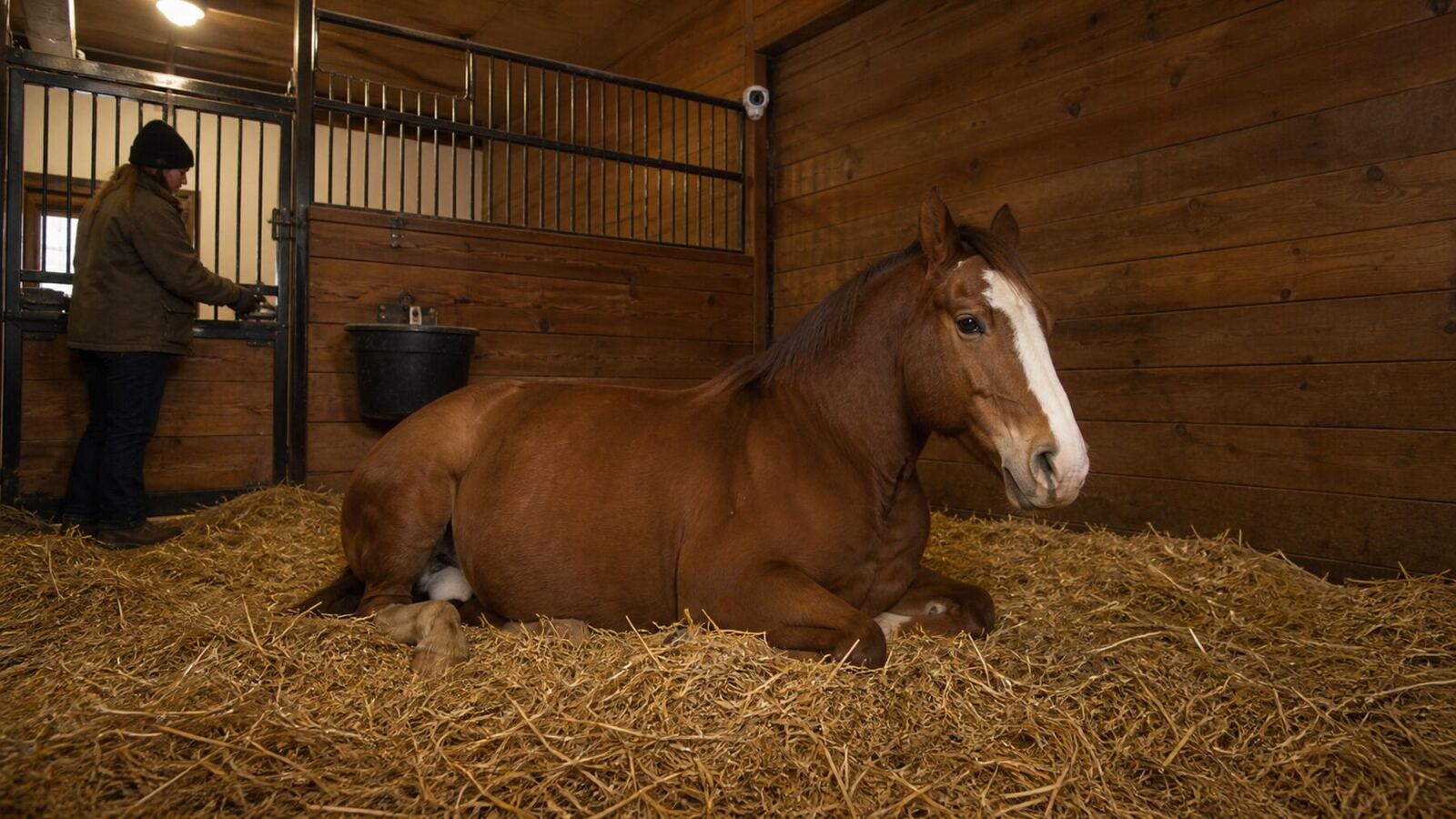
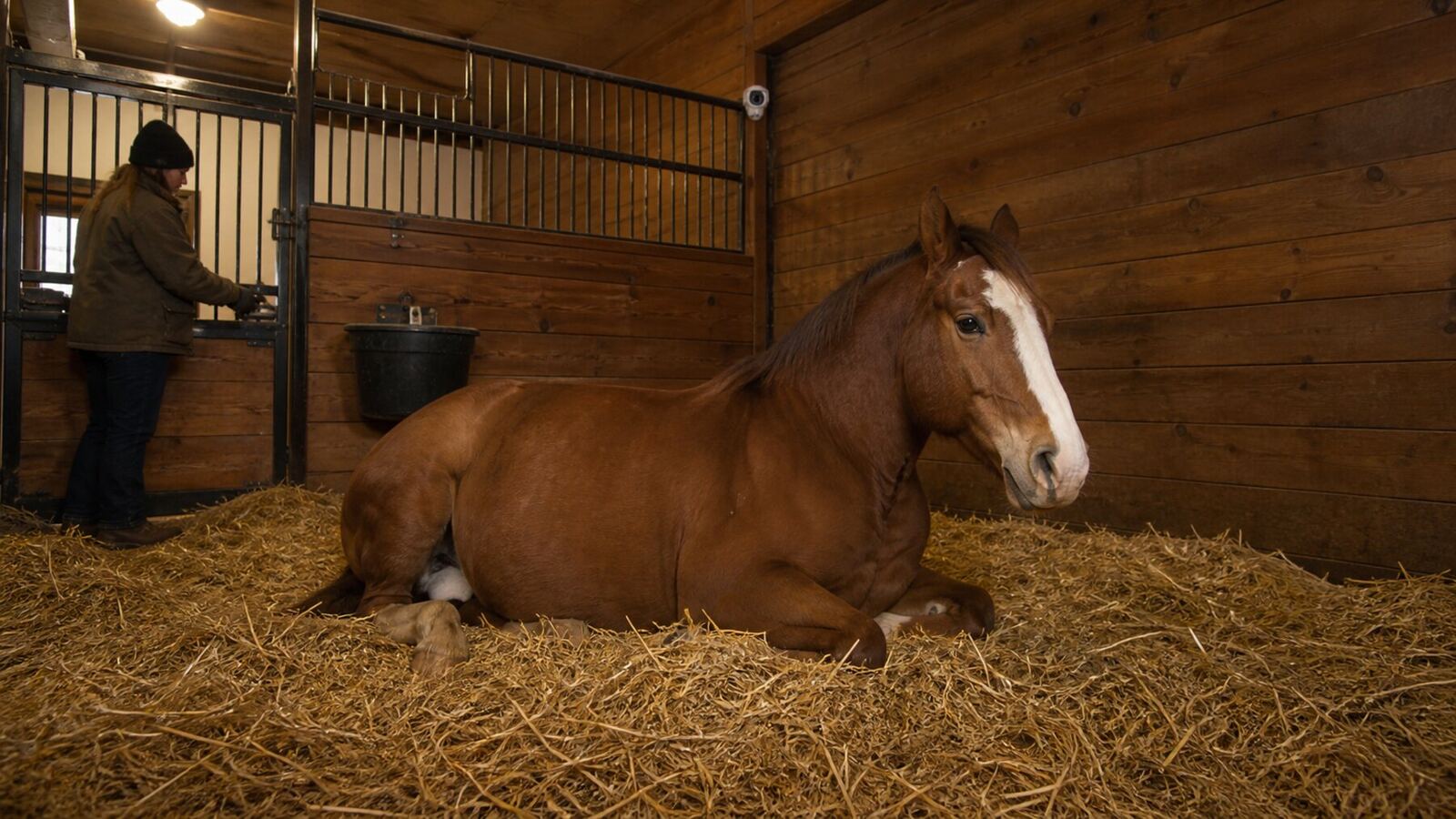
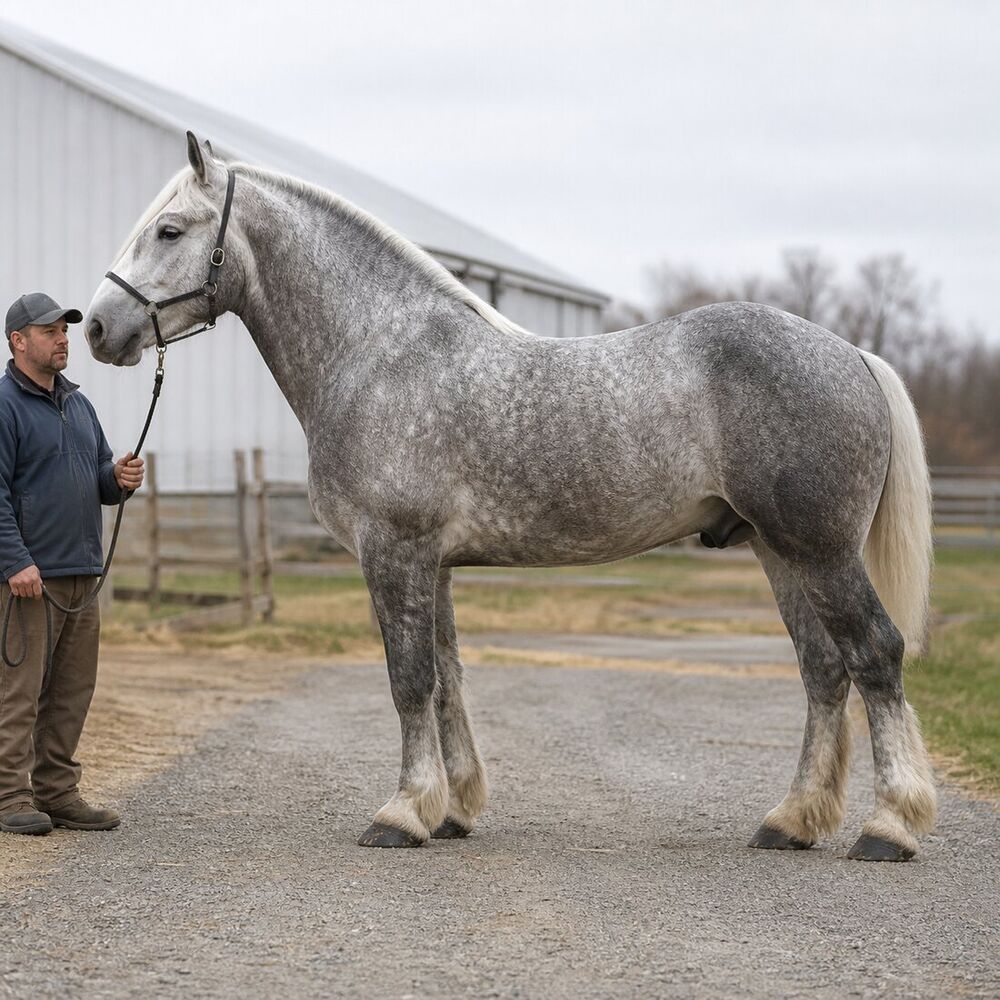
Evaluate the stallion on level ground and, where safe, in motion. Note feet, pasterns, joints, topline, shoulder, hindquarter, balance and the way the horse tracks at a walk and trot. Photographs are useful for comparison only when the stance, lens and surface are known. A heavily posed image can hide as much as it shows. Ask for recent, unretouched views from both sides, front and rear, then compare them with your own observation.
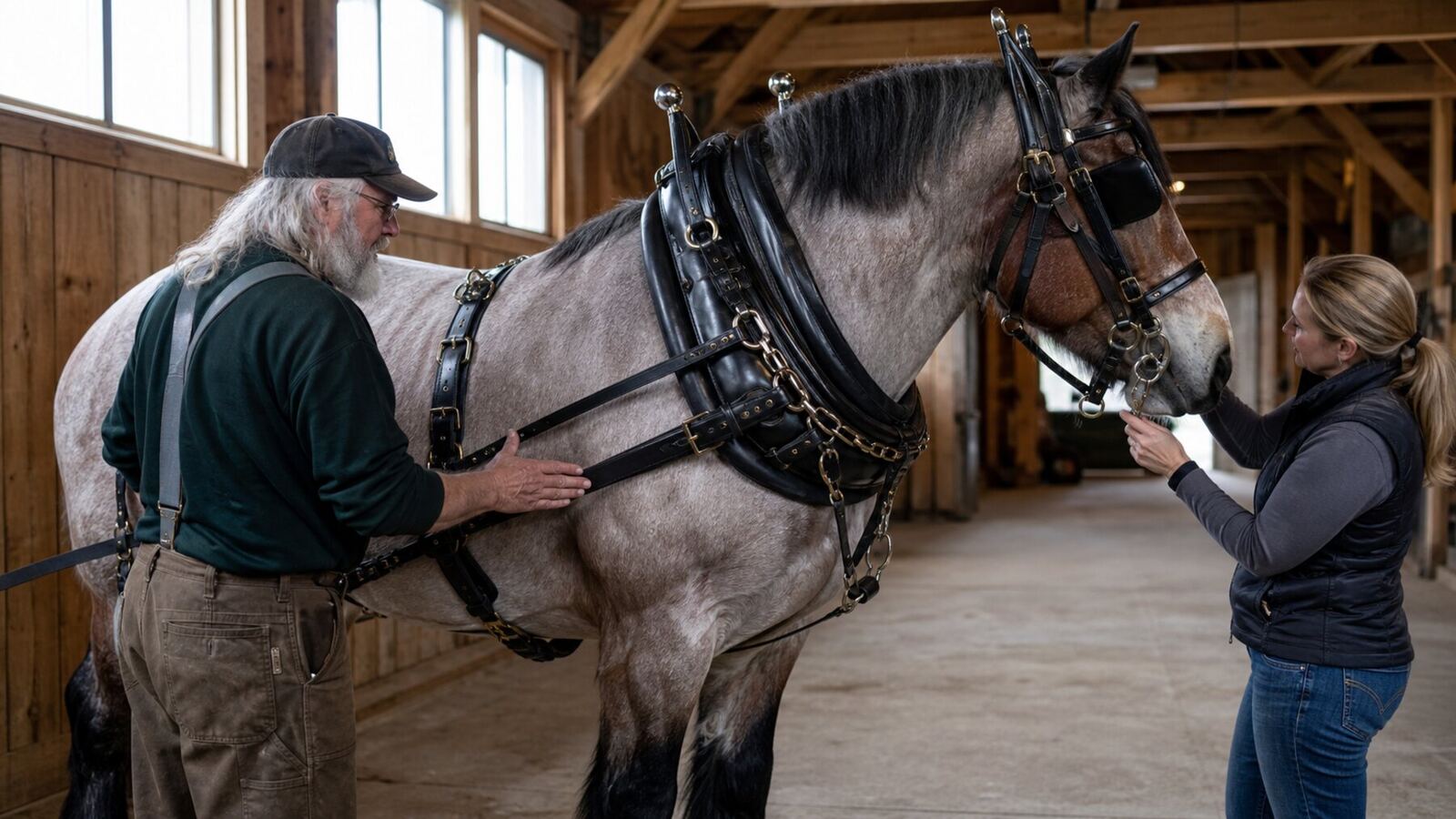
Temperament should be described through situations rather than adjectives. 'Quiet' is vague; standing for harness, loading after a long day, working away from companions and recovering after a surprise are observable contexts. Ask who handled the horse, how often and under what conditions. When possible, speak with more than one person who has worked with him and distinguish a practiced response from an untested assumption.
Build a health and breeding file
Request the breeding soundness information that is appropriate for the stallion and season, along with vaccination, hoof-care and relevant veterinary records. Genetic testing should follow the breed's current recommendations and the risks present in the proposed mating. Some Belgian records, for instance, discuss Junctional Epidermolysis Bullosa status. A test result has meaning only when the horse, laboratory, date and interpretation are clearly identified.
Progeny records are especially valuable. Count all known foals, not only the promoted ones, and note mare families, age, sex, survival, registration, conformation, temperament and use. Small numbers require modest conclusions. If six foals from similar mares share a trait, that is an observation worth tracking, not proof that every future foal will inherit it. Keep missing data visible instead of treating silence as a favorable result.
Compare the stallion with the mare
The useful question is not whether a stallion is impressive in isolation. It is whether the proposed pairing has a defensible purpose. Place the mare's strengths, weaknesses, health information, pedigree and intended market beside the stallion's file. Avoid the simple idea that one horse automatically 'fixes' the other. Both contribute variation, and the same pairing can produce more than one type of foal.
Consider practical outcomes as well: mature size, feed and hoof-care demands, sale market, handling facilities and the buyer likely to want the resulting horse. A larger foal is not automatically a better foal. For a farm seeking a handy all-purpose team, sound feet, tractable behavior and compatible movement may matter more than maximum height or fashionable color.
The same habit of checking papers before reputation applies beyond draft breeds. A Belgian Tervueren owner in Saarland asks the same questions: which registry documents prove ancestry, what the FCI standard says about the dog in front of you, and what BH-VT through IGP titles actually record about work. That parallel is set out in reading a Tervueren pedigree, which covers breed papers, the work ladder and local rules. Read it beside your stallion file: identity first, then ancestry, then the living animal.
Use a written decision sheet
Finish with a one-page comparison that lists verified facts, owner statements, open questions and reasons for the mating. Include registration identifiers, dates checked, health documents received, breeding terms, live-foal provisions and who carries each cost. Keep copies of advertisements as dated claims, not as independent proof. A short, transparent file is more useful next season than a confident memory.
The best pedigree reading does not eliminate uncertainty. It shows where uncertainty remains and prevents a recognizable name from doing all the reasoning. If the mating proceeds, update the same file with conception, foaling and development records. Over several seasons, the farm's own consistent observations become more valuable than any single sales description.
The same discipline applies beyond draft horses. Dutch collie owners begin with the breed standard rather than the seller, read three generations as evidence, and pair ancestry with the living animal, exactly as you would when checking a stallion's identity, health records and working evidence. Their method for reading a collie pedigree shows how dated health tests and a written file replace reputation. If your decision sheet already covers ancestry, conformation and the mare, borrow their habit of demanding paperwork before commitment.
Sources and further reading
Documents used for this guide
- Belgian Draft Horse Corporation registry update
- Belgian Draft Horse Corporation DNA and JEB information
- Percheron Horse Association of America bylaws
Rules and recommendations can change. Check the linked publisher and the professional responsible for the individual horse before acting.