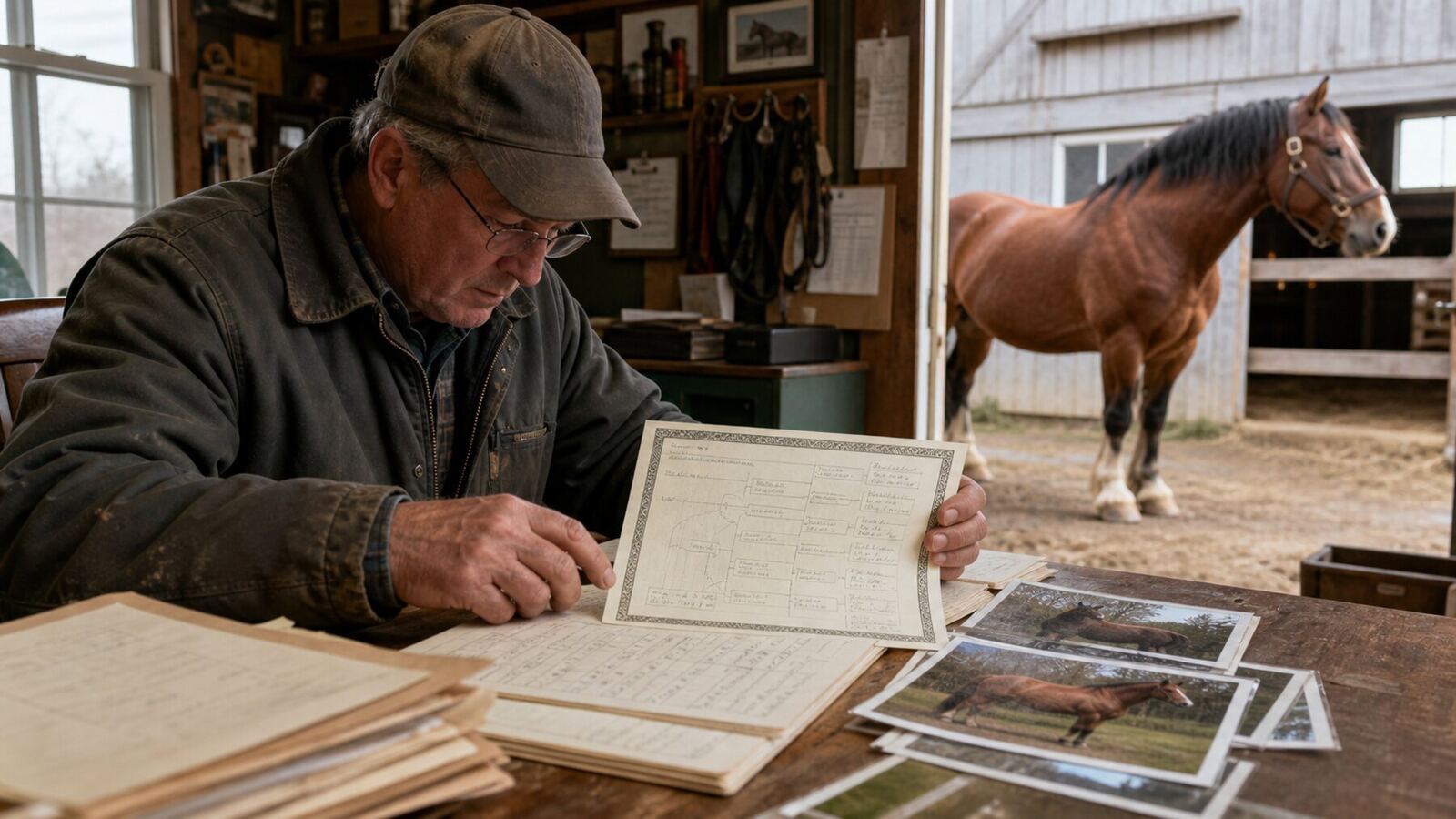
How Dutch collie owners read a pedigree, plan the puppy year and use FCI standards plus dated health tests before buying or breeding.
Start with the standard, not the seller
A collie pedigree is read from the parents outward: registered names, kennel prefixes, stud book numbers and titles, then the ancestors behind them. The first year of a collie puppy moves through vaccination, socialization, coat change and growth checks rather than a single milestone. The inherited conditions tested in collies include MDR1, CEA and several eye disorders examined under the ECVO scheme.
The breed standard is the fixed reference point. The FCI recognises the Rough Collie under standard 156 and the Smooth Collie under standard 296. Both describe the same dog in different coat, and both list sable, tricolour and blue merle as accepted colours. A Dutch buyer can check a litter against those documents before looking at photographs.
The standard also sets the head, ear carriage and body proportions that judges assess at shows. That matters because a pedigree full of show titles tells you the ancestors were measured against the same written description. It does not tell you how the dog behaves at home, which is a separate question.
For a Dutch-language guide that walks through the breed, its papers and its care in the Netherlands, the Dutch collie guide covers the standard, the pedigree and the health material in one place. Read it alongside the FCI texts rather than instead of them.
How do you read a collie pedigree?
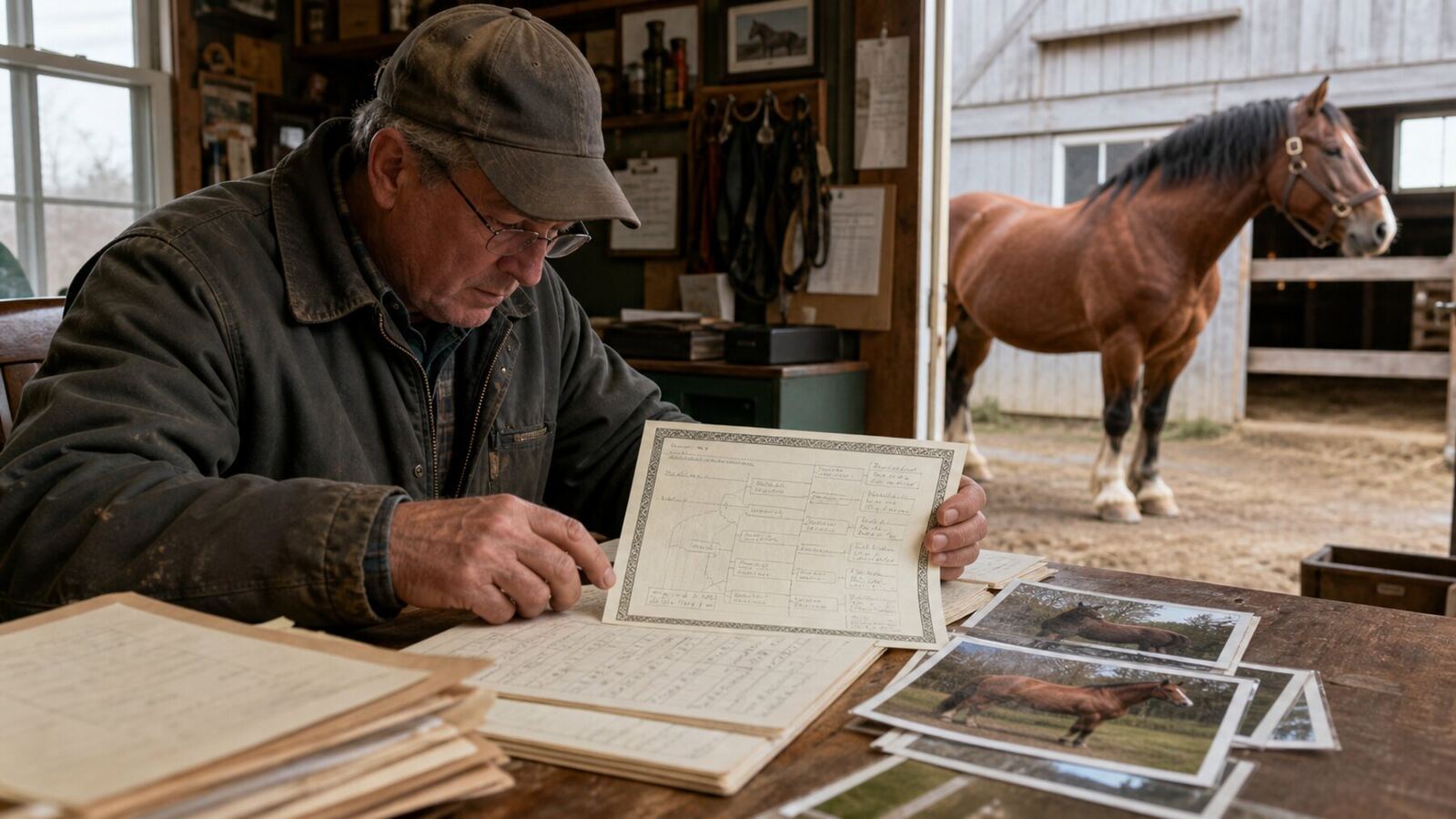
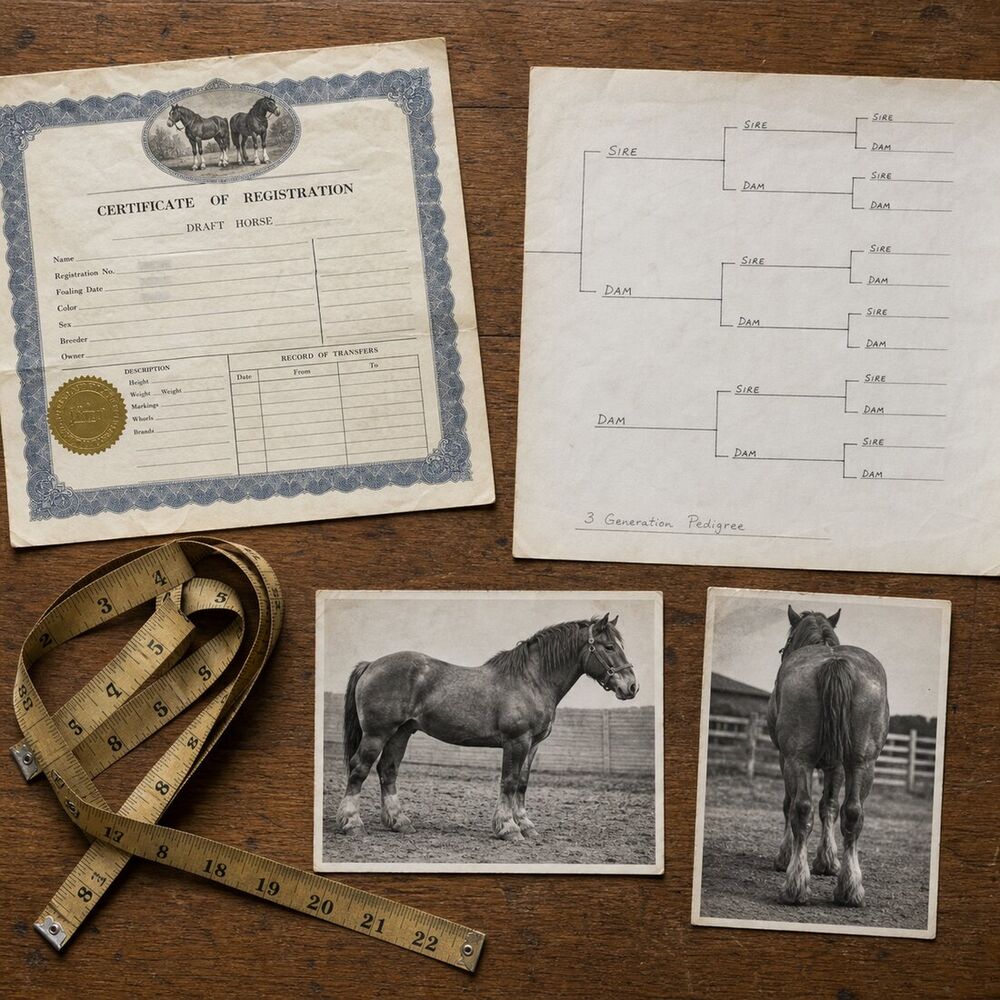
A pedigree is a four or five generation chart. Each dog appears with a registered name, often a kennel prefix, a stud book or registration number, and sometimes titles placed before or after the name. Read it in three passes.
First, check the registration numbers. In the Netherlands these come from the Raad van Beheer, the national kennel club that keeps the stud books. A number that cannot be traced back to a registered parent is a gap, not a detail.
Second, look at the vertical lines. If the same dog appears on both the sire's and the dam's side within three or four generations, that is line breeding, and it concentrates both the good traits and the health risks. Ask the breeder to name the repeated dog and explain why it was used.
Third, separate titles from health results. A championship title means the dog met a judge's reading of the standard on a given day. It says nothing about hips, eyes or the MDR1 gene. Those come from test certificates, which are separate documents with dates and laboratory names.
A useful habit is to write the pedigree out by hand, one generation per line, and mark every dog with a known test result. The blank spaces are the honest part of the exercise.
What does the first year of a collie puppy look like?
The first year divides into stages, and each stage has its own practical task.
Weeks 0 to 8 belong to the breeder. Puppies are wormed, weighed and introduced to household sounds. A responsible Dutch breeder will show you the whelping area and the mother, and will have started the paperwork for registration.
Weeks 8 to 12 are the socialization window. The puppy meets people, surfaces, traffic noise and other vaccinated dogs. Vaccination schedules in the Netherlands usually begin around six to eight weeks, with follow-up doses, so ask the vet which contacts are safe before the course is complete.
Months 3 to 6 bring the coat change. A rough collie puppy loses the soft puppy coat and grows the double coat that will need regular brushing for life. This is also when house training, lead manners and recall are built. Short, frequent sessions work better than long ones.
Months 6 to 12 are adolescence. The dog may test boundaries, bark more, and grow unevenly. Growth plates in a collie are still closing, so keep jumping and long forced runs modest. The first season in a bitch usually arrives in this window, and the timing affects when health tests can be done.
By twelve months the puppy should have a routine: daily brushing, a recall that works in a quiet field, and a veterinary record showing which vaccinations and checks are complete. The inherited disease tests that require a DNA sample can be done earlier; eye examinations are usually repeated over the dog's life.
Which inherited conditions are tested in collies?
Collie breeding in the Netherlands works from a small set of named tests. The list below is the one owners are most often asked about.
MDR1, also called the multidrug sensitivity gene, is a DNA test. Dogs carrying the affected variant can react badly to certain medicines, including some common antiparasitics. The result is reported as clear, carrier or affected, and it should be known before any drug is given.
CEA, or collie eye anomaly, is assessed by eye examination rather than a DNA test alone. A veterinary ophthalmologist looks at the back of the eye and grades what is found. In the Netherlands these examinations follow the ECVO protocol, and results are dated.
Other eye conditions checked in the same examination include hereditary cataracts and progressive retinal atrophy. Because the eye changes with age, a single clear result is not a lifetime certificate; breeders repeat the examination.
Hip and elbow scores come from radiographs submitted to a recognised scheme. The numbers describe the shape of the joints, not the dog's comfort, but they are the standard comparison between breeding animals.
A pedigree alone cannot tell you any of this. Ask for the certificates, check the dates, and confirm that the laboratory or examiner is one the Dutch kennel club accepts. If a breeder cannot produce them, that is information too.
Health paperwork before you commit
Before a deposit changes hands, ask for four things in writing: the registration numbers of both parents, the DNA test results for MDR1, the most recent eye examination certificates, and the hip and elbow scores. Then check the dates. An eye certificate from three years ago describes a younger dog.
Ask also what the breeder does with the results. A carrier dog can be bred to a clear dog without producing affected puppies, so a carrier result is not automatically a reason to walk away. The question is whether the pairing was planned around the results.
Finally, keep your own file. When your collie is examined, add the date and the examiner to the same folder. Over ten years that folder becomes the most useful document you own, and it travels with the dog to any new vet.
Where the Dutch material fits
The Netherlands has its own layer of institutions: the Raad van Beheer for registration, ECVO-linked ophthalmologists for eye examinations, and breed clubs that publish test advice. A Dutch-language guide is useful precisely because it names those bodies and their documents rather than repeating general advice.
For an owner in Eastern Connecticut, the practical value is the method, not the geography. Read the standard, trace the registration numbers, separate titles from tests, and plan the puppy year in stages. The same four steps work whether the pedigree was issued in Amsterdam or in New England.
The same method carries across breeds, even when the paperwork changes. Dutch collie owners start with the FCI standard, read the pedigree for what it actually records, and ask for dated health tests before committing. A buyer working through an American cocker breed profile meets the same sequence: how the American cocker differs from the English cocker, what the first year asks in coat, health and training, how to judge a breeder and the parents, and what the first month realistically holds. Different registries, one habit: read the standard, then the evidence.
Sources and further reading
Documents used for this guide
Rules and recommendations can change. Check the linked publisher and the professional responsible for the individual horse before acting.