A source-led inspection sequence for wheels, hubs, frames, shafts, brakes, connections and storage of horse-drawn vehicles.
Secure the vehicle before inspecting it
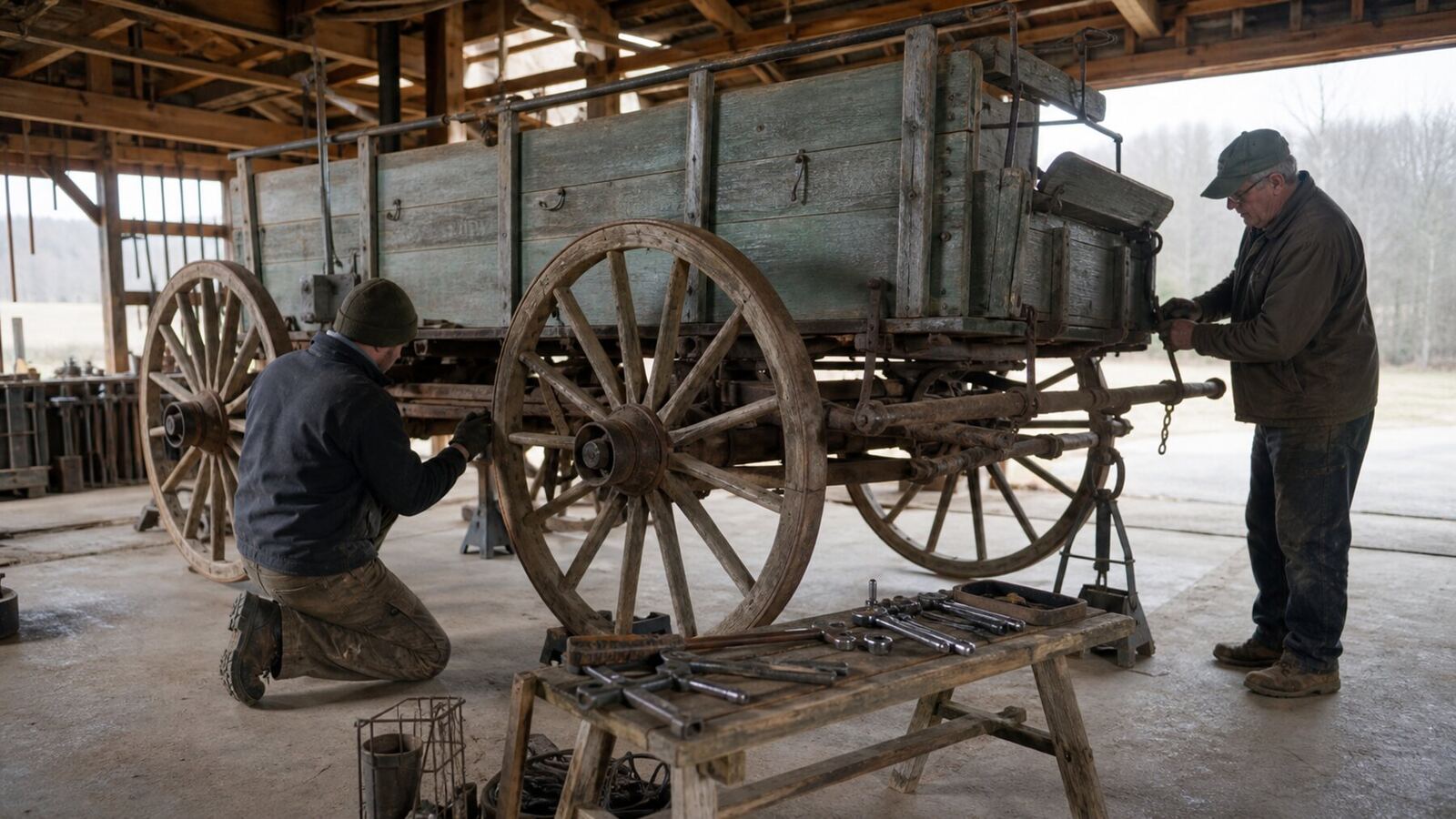
Park on level, firm ground, chock wheels and remove the horse. Support any raised vehicle with stands rated for the load; never rely on a jack alone. Stabilize shafts and moving bodies so a person cannot be trapped by a turntable, pole or tipping box. Good light and a clean floor make small cracks, missing keepers and fresh metal dust easier to see.
Identify the vehicle, owner, approximate age, intended load and last service. Photograph its condition before disassembly. Historic wagons often contain repairs from several periods, so an unfamiliar bolt or welded plate deserves investigation rather than immediate removal. If structural integrity is uncertain, involve a wheelwright, blacksmith or qualified vehicle specialist before hitching.
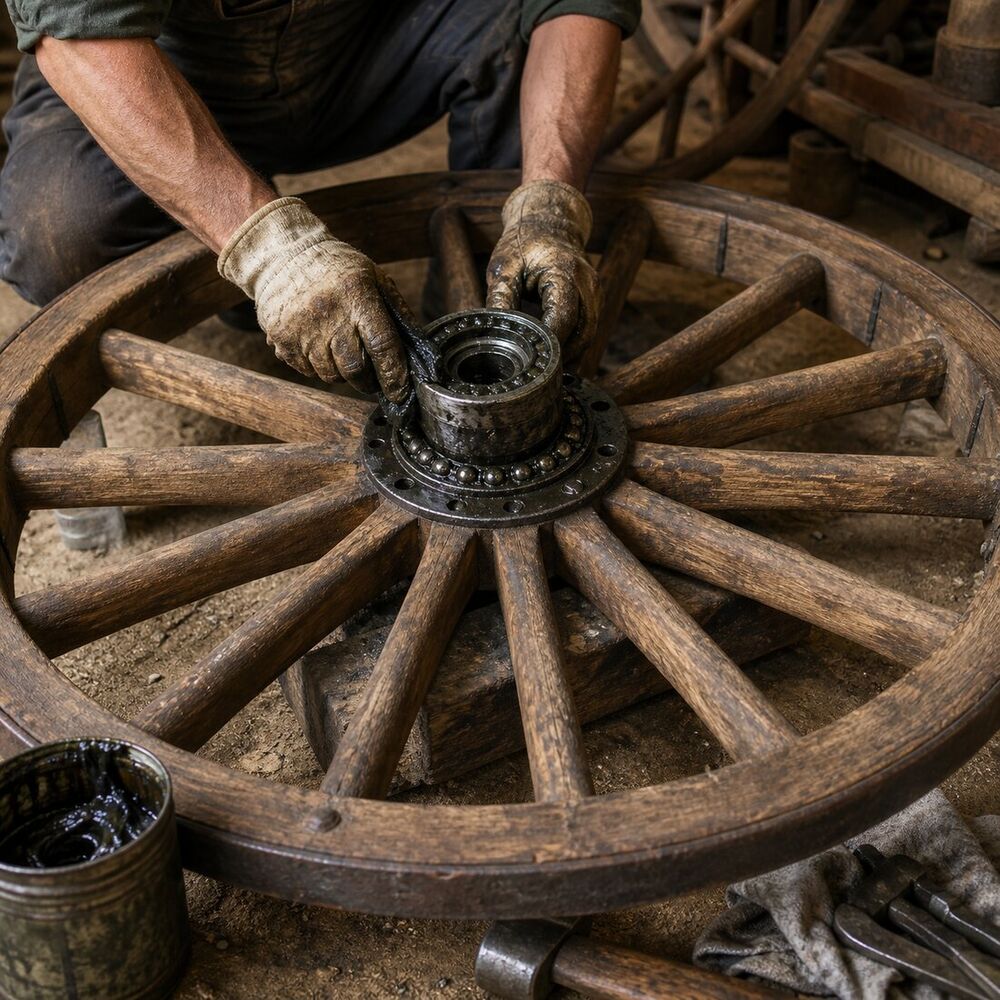
Read every wheel from rim to axle
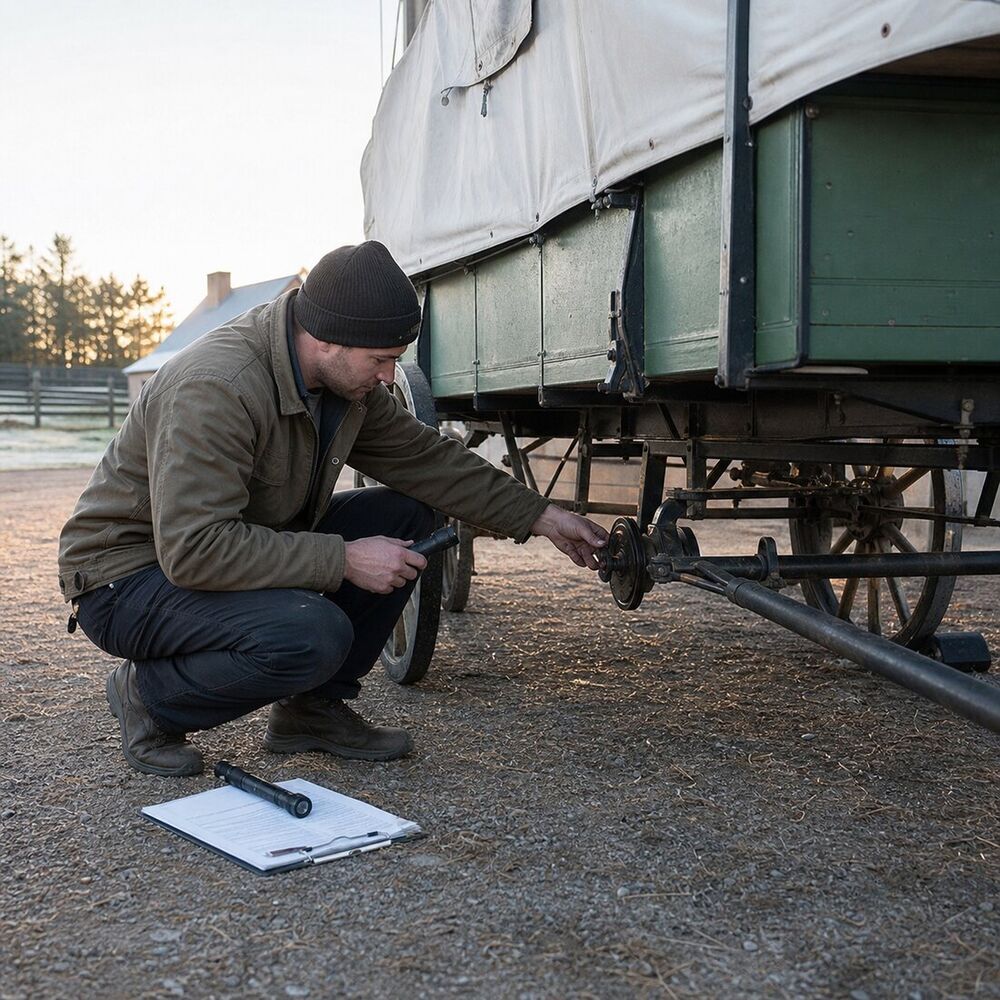
Rotate each wheel and watch the rim from front and side. Look for wobble, loose tires, cracked or shrunken felloes, damaged spokes and movement at the hub. Tap comparisons can help an experienced craftsperson locate differences, but sound alone is not a structural test. Check that wheel nuts and retainers match the axle design.
Service hubs and bearings according to their actual construction. Clean old lubricant enough to inspect bearing surfaces, bushings and axle ends for scoring, heat discoloration, contamination and excess play. Use the correct lubricant and adjustment rather than packing every cavity. After assembly, rotate again and verify retention before the vehicle carries weight.
Inspect the frame and running gear
Follow the frame rails, bolsters, reach, crossmembers and turntable. Probe suspicious wood for softness only with a method that will not create damage, and look around fasteners for crushed fibers, elongated holes and dark moisture paths. Surface paint can conceal rot. Iron straps, welds and brackets require checks for cracks, bending and corrosion where sections overlap.
Move the steering through its full safe range and check for binding, excessive play and contact between wheels and body. Verify that stops and pivot retainers are present. A wagon that turns freely while empty may shift under load, so measurements and professional evaluation matter when wear is uneven.
Treat shafts, pole and connections as critical parts
Examine shafts and pole along their entire length, including grain runout, splices, metal caps and points hidden by leather. Check singletrees, doubletrees, neck yoke, evener hardware and trace connections for cracks, deformation and free movement.
Confirm that shaft height, width and balance suit the horse and harness. The University of Maine's wagon-ride safety guidance emphasizes equipment, routes and operating practices as one safety system. A sound vehicle that is poorly matched to the team can still create pressure, instability and loss of control.
Verify brakes under controlled conditions
Inspect pedal or lever, rods, cables, equalizers, pivots and friction surfaces. Look for seized joints, missing return springs, contamination and unequal adjustment. Confirm that the brake holds the empty vehicle on a controlled test area before adding passengers or cargo. Do not use the horse to compensate for an uncertain brake.
The United Kingdom's code of practice for horse-drawn vehicles provides a useful example of formal expectations for vehicle condition, braking and driver responsibility. Local road law may differ, so check the jurisdiction where the vehicle will travel. Lighting, reflectors, slow-moving-vehicle markings and insurance also require current local answers.
A wagon or sled inspection rewards the same patience you would apply to any animal purchase: name the authority, check the parts in order, and write down what you find. If you also keep dogs, the method carries over to choosing a cocker breeder, where the target page asks how to judge a breeder and the parents. Both tasks turn on reading structure and condition rather than reputation, and both end with a record you can compare against the next visit.
Load, test and store with a record
After repairs, conduct an unhitched roll and brake test where the vehicle can be controlled mechanically. Then use an experienced horse and driver for a short, level, low-load test with a ground observer. Listen for new knocks and stop to check hub temperature, fasteners, wheel position and harness connections. Increase distance and load only after repeat inspections remain normal.
Log date, findings, work performed, parts used and the person responsible. Store the vehicle dry, ventilated and supported so tires, shafts and upholstery are not damaged. Reinspect after long storage, severe weather or transport.
A wagon inspection and a wildlife survey share the same habit of reading ground and structure before touching anything. Secure the vehicle, then work wheel by wheel from rim to axle, check the frame and running gear, treat shafts, pole and connections as critical, verify brakes under controlled conditions, and record the result before storage. On a trail the same patience applies to reading tracks and scats without disturbing animals, which is where identifying wombat and koala signs fits alongside our vehicle checks: both reward the observer who looks first and moves last.
Sources and further reading
Documents used for this guide
- University of Maine Cooperative Extension: horse-drawn wagon ride safety
- UK Government code of practice for horse-drawn vehicles
- The National Drive safety checklist
Rules and recommendations can change. Check the linked publisher and the professional responsible for the individual horse before acting.