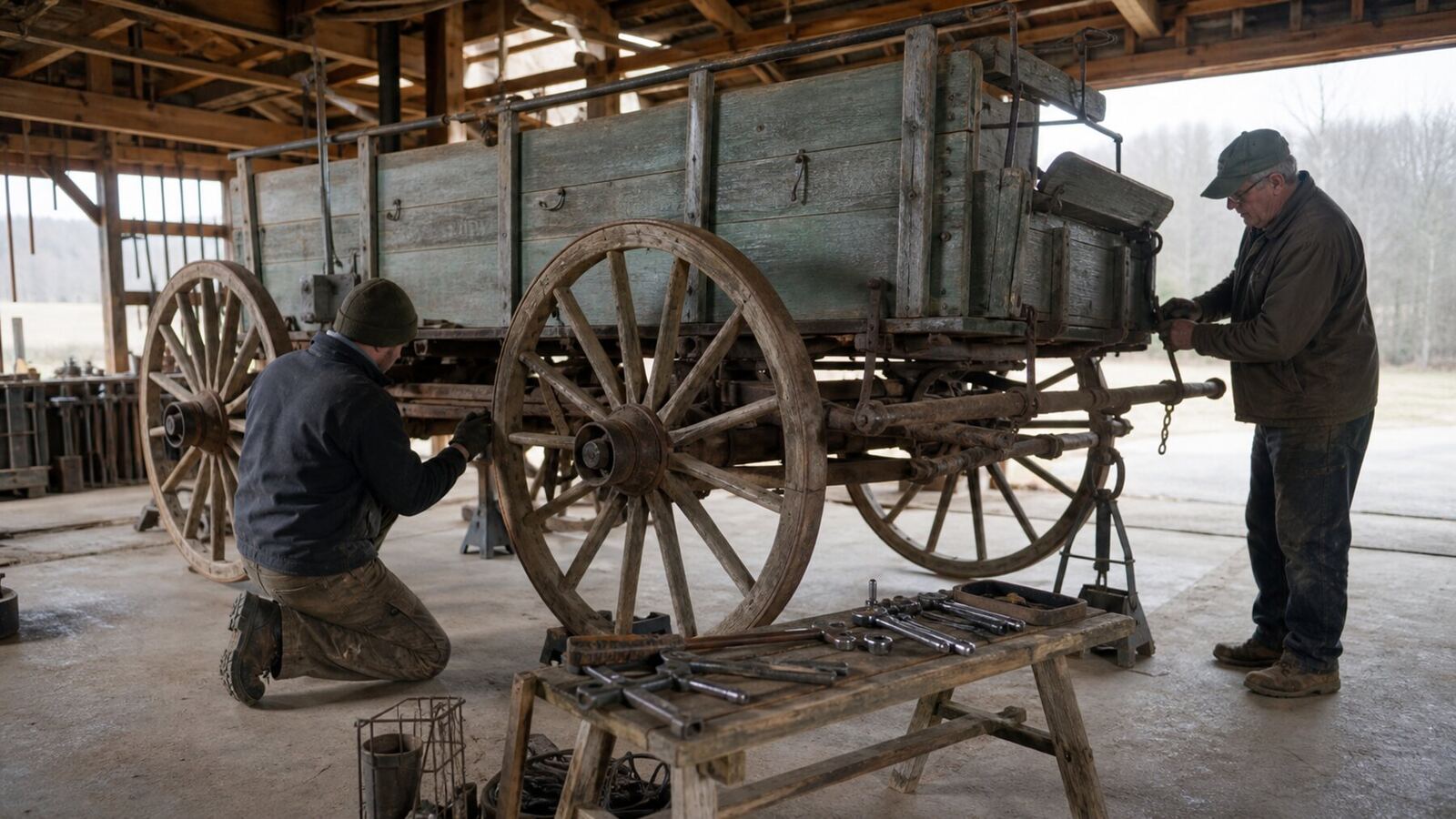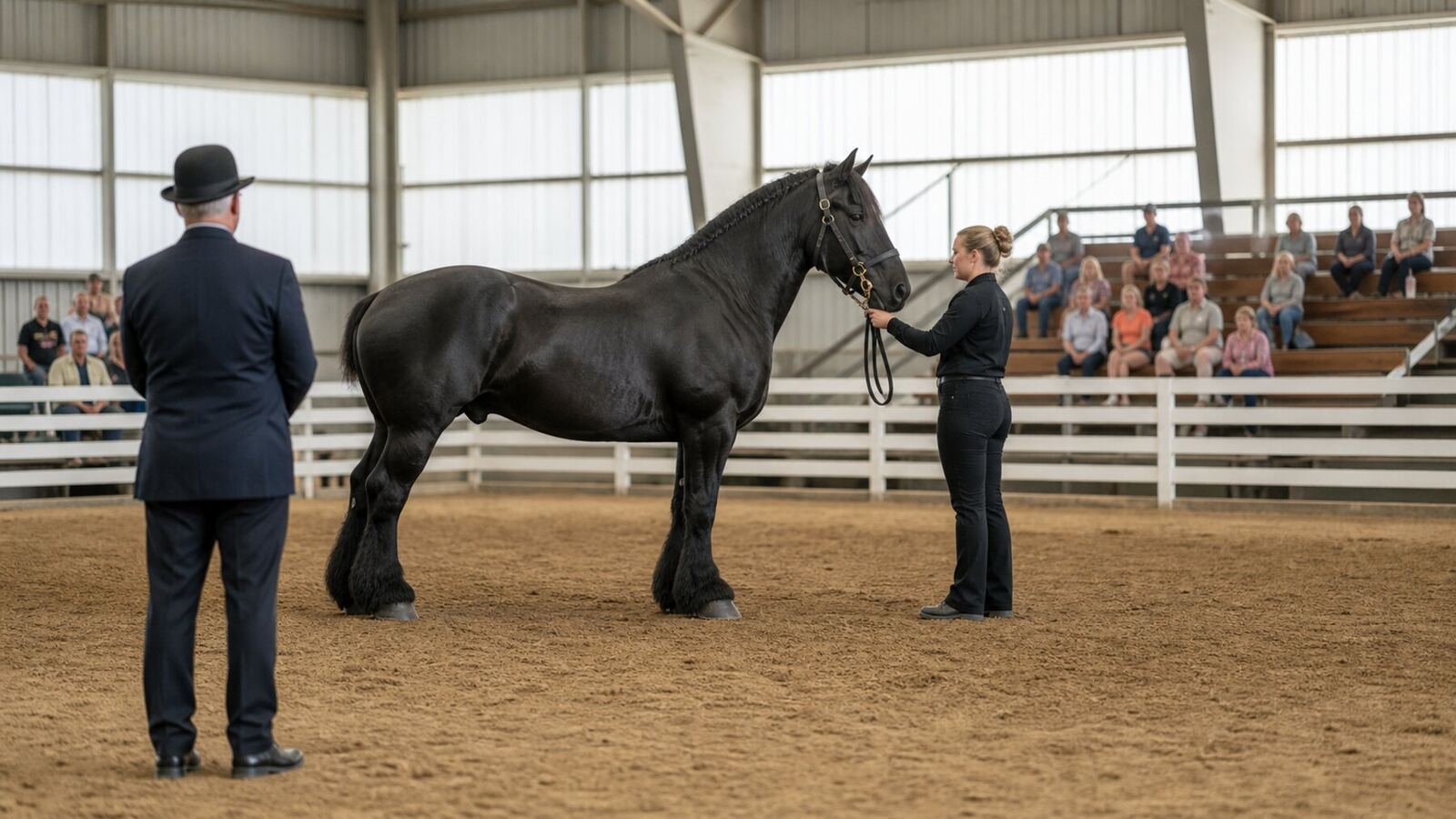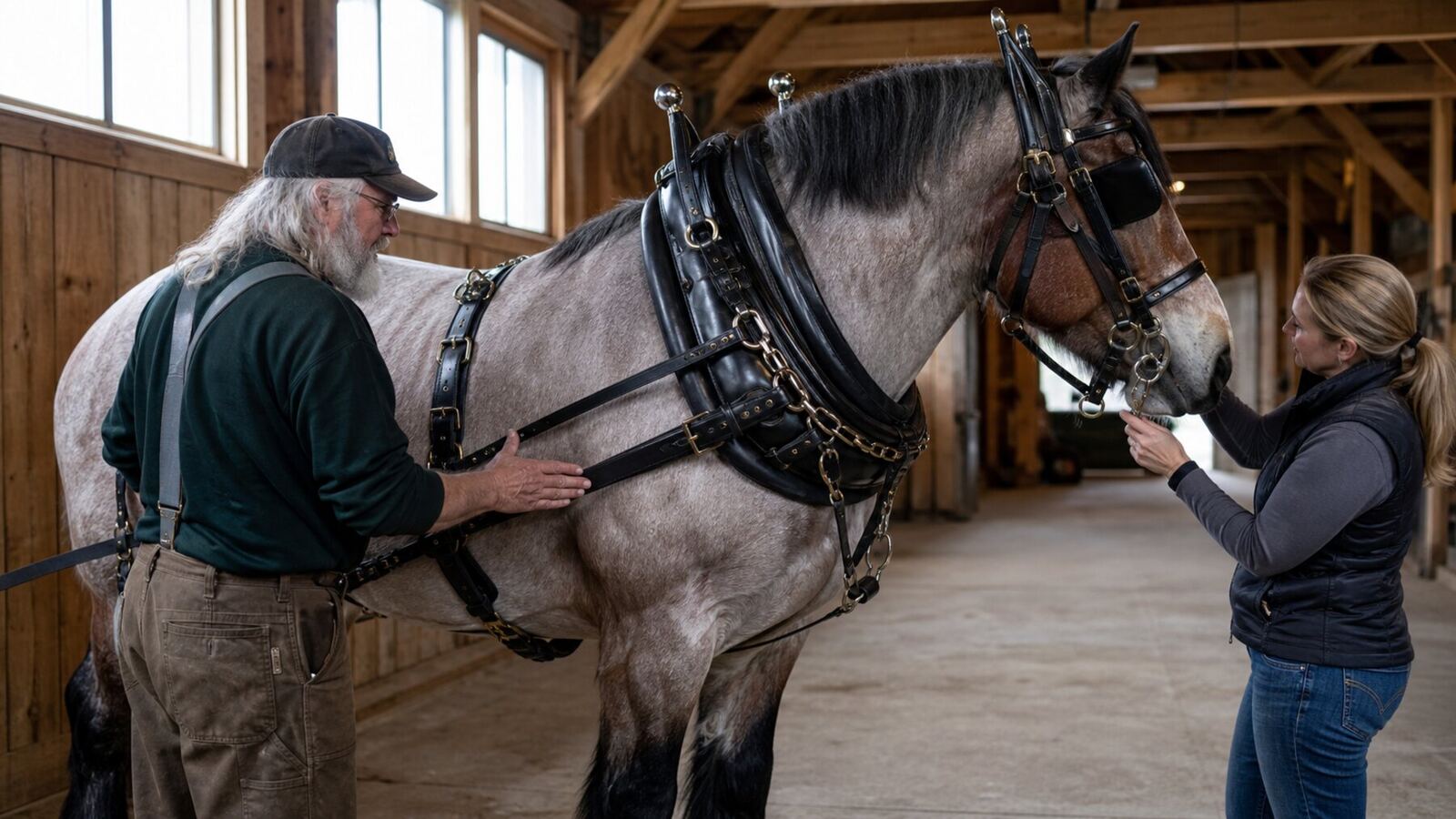
Trace the load through collar, hames, saddle, breeching and traces to assess a draft-horse harness at rest and in motion.
Identify the work before buying the harness
Describe the vehicle or implement, terrain, pace, frequency and whether the horse works single or as part of a team. A show turnout, forecart, logging arch and farm wagon place different demands on the system. Decide whether a full collar or breast collar is appropriate with an experienced harness professional. Do not select by appearance or label alone.
Measure the individual horse and record date, body condition and who took the measurements. Draft horses change through age, season and conditioning. Borrowed equipment that seemed acceptable on a similarly sized horse may sit differently at the shoulder, withers or hindquarters. Fit belongs to the horse and task together.
Read the collar as a load-bearing surface
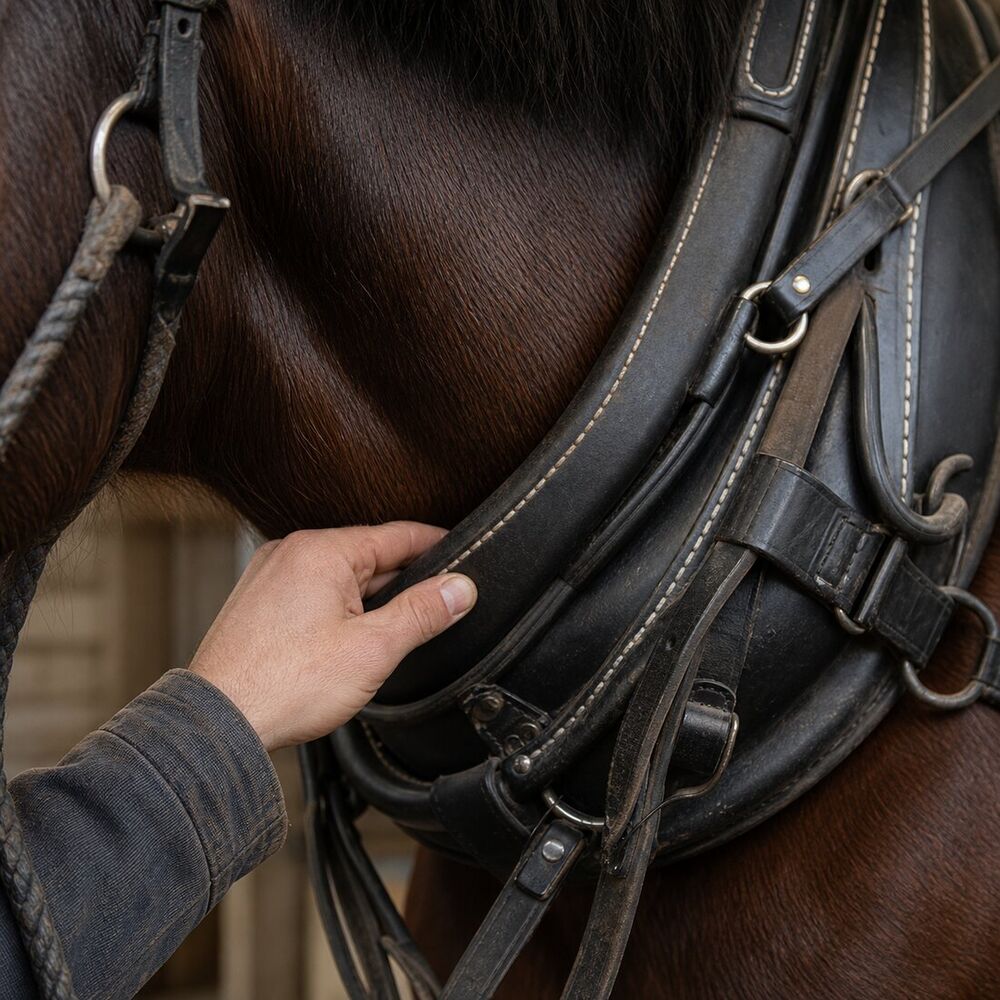
A full collar should follow the shoulder without pressing the windpipe, restricting movement or rocking excessively. Check the throat, sides and lower point with the horse standing square, then watch as the traces become taut. A gap in one place does not prove the entire collar fits. Sweat pattern, hair disturbance and tenderness after work can reveal contact that a static check missed.
Hames must match the collar and sit at the correct height, secured by sound straps and hardware. The trace attachment should direct force cleanly without tipping the collar. Ask a qualified fitter to evaluate unfamiliar combinations. Adding pads to solve an incorrect shape can create new pressure rather than correct the original problem.
Balance saddle, girth and back straps
The harness saddle should sit behind the withers as designed and distribute the weight it carries without concentrating pressure. Girth and belly band stabilize the harness but should not bind breathing or allow shafts to bounce. Check clearance along the spine and keep straps flat, untwisted and away from the elbow.
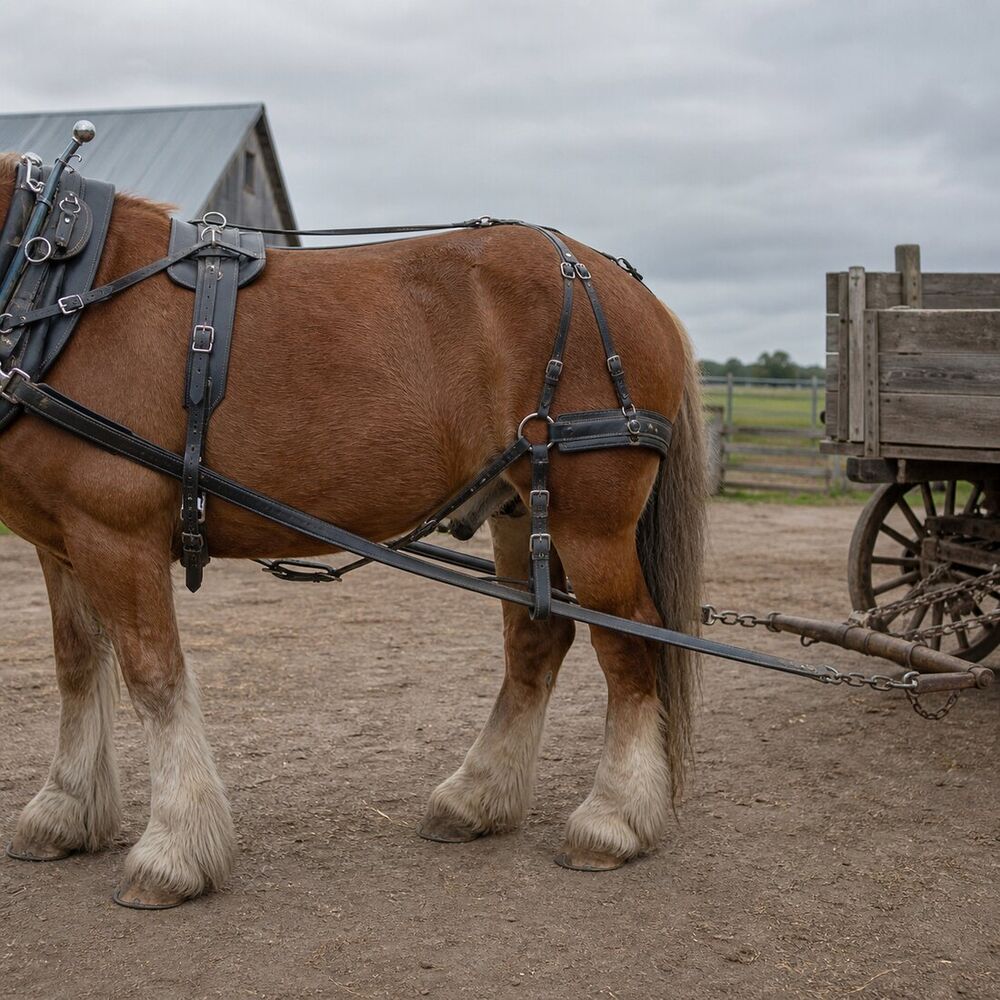
Back straps and hip straps should hold the rear harness in place without pulling it forward at rest. Observe the system while turning in both directions. A harness that looks centered on the cross-ties may shift when one shaft rises or the horse bends. Correct the cause rather than tightening every strap.
Fit breeching for the vehicle
Breeching allows the horse to hold back or stop a wheeled vehicle. It should lie across the muscular part of the hindquarters, not too high under the tail or too low near the hocks. The side straps must engage at the intended point without letting the vehicle run forward before the horse can control it.
Shaft height, holdback straps and vehicle balance affect breeching fit. Evaluate them as a system on level ground before using a slope. The Oregon State driving manual illustrates harness parts and safe preparation, while carriage-driving proficiency programs emphasize inspection and practical control. Use those resources with hands-on instruction for the exact turnout.
Inspect traces, lines and every connection
Traces should be equal, untwisted and aligned with the draft point. Inspect leather for cracks around holes and folds, synthetic material for cuts or heat damage, and chains for elongated links. Snap hooks, clevises, pins and keepers need positive closure. A decorative polish does not restore weakened material.
Lines should travel without catching on hames, terrets, tails or vehicle parts. Confirm that the bit and bridle arrangement suit the trained horse and driver. Replace improvised repairs before work. If equipment has an unknown history, clean it first, then inspect every hidden fold and attachment under good light.
A harness check and a wildlife check share one habit: read the evidence before you act. Trace the load through collar, hames, saddle, breeching and traces at rest, then in walk and light draft, and you are doing what recognising coastal wildlife asks of a walker on the South Coast, where kangaroo and wallaby gait, wombat burrows, koala signs, and kookaburra, rosella and black cockatoo calls are read at a distance. Both reward the same discipline: look first, keep your distance, and confirm the identification before you commit.
Test at rest, walk and light draft
Begin with a complete static check, then lead or drive at a walk without meaningful load. Watch from both sides and behind while a competent driver maintains control. Add a familiar light load only when the harness remains stable. Stop after a few minutes to check heat, rubbed hair, pinched skin and shifted straps.
Record the configuration with photographs and measurements so it can be reproduced after cleaning or adjustment. Recheck fit after weight change, a new vehicle or a period out of work. Correct harness is not a purchase completed once. It is a maintained relationship among horse, equipment, driver and task.
A fit that holds at home still deserves a fresh look before a long day in public: heat, waiting time and an unfamiliar surface all change what the harness is asked to do. The field note on bringing a horse to a public event adds the weather check, the access questions and the exit plan that sit around the fit inspection.
Harness fitting is one part of a wider habit: matching the animal to the job in front of it. The same logic applies off the vehicle, which is why the field guide to the Kuvasz covers the FCI standard, early socialisation, and the health risks that matter in a white livestock guardian breed. If you keep a white dog alongside your draft stock, coat care for a white Kuvasz belongs in the same routine as checking collar, hames, saddle, breeching and traces before you hitch.
Sources and further reading
Documents used for this guide
- Oregon State University Extension: 4-H Driving Manual
- Carriage Association of America driver proficiency program
- The National Drive safety checklist
Rules and recommendations can change. Check the linked publisher and the professional responsible for the individual horse before acting.